Cas9 Polyclonal Antibody, Invitrogen™
Manufacturer: Thermo Scientific
Select a Size
| Pack Size | SKU | Availability | Price |
|---|---|---|---|
| Each of 1 | PIPA5143502-Each-of-1 | In Stock | ₹ 1,46,494.00 |
PIPA5143502 - Each of 1
In Stock
Quantity
1
Base Price: ₹ 1,46,494.00
GST (18%): ₹ 26,368.92
Total Price: ₹ 1,72,862.92
Antigen
Cas9
Classification
Polyclonal
Conjugate
Unconjugated
Gene Alias
cas9; CASP 9; Caspase9; Caspase-9 precursor; CASPASE-9c; CRISPR9; CRISPR-Cas9; CTD; OTTHUMP00000002324; RNCASP9; RP11-265F14.3; s aureus
Immunogen
N-terminal region, amino acids 1-608 and C-terminal region, amino acids 814-1372 of CAS9 sequence CDJ55032.1 from S. pyogenes, expressed in and purified from E. coli
Quantity
500 μL
Primary or Secondary
Primary
Content And Storage
Store at 4°C short term. For long term storage, store at -20°C, avoiding freeze/thaw cycles.
Form
Liquid
Applications
Immunocytochemistry, Immunohistochemistry, Western Blot
Concentration
1 mg/mL
Formulation
PBS with 50% glycerol and 5mM sodium azide
Host Species
Rabbit
Purification Method
Affinity chromatography
Regulatory Status
RUO
Target Species
Bacteria
Product Type
Antibody
Isotype
IgG
Related Products


Description
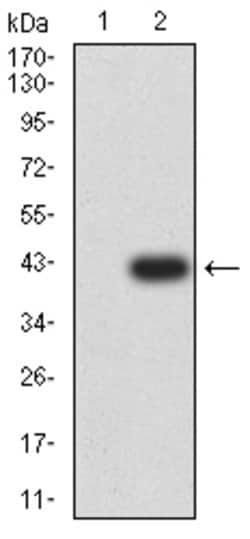
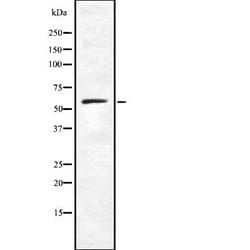
- Western blot dilution: 1:1,000-1:2,000 (CAS9 transfected cells); 1:10,000 or lower (pure Cas9 protein) Cas9 is an RNA-guided DNA endonuclease enzyme associated with the CRISPR (Clustered Regularly Interspaced Short Palindromic Repeats) adaptive immunity system in bacteria and genetic engineering
- The system is unique and flexible due to its dependence on RNA as the element that targets the nuclease to a desired DNA sequence
- It can be used to induce indel mutations, specific sequence replacements/insertions, and large deletions or genomic rearrangements at any desired location in the genome
- In addition, Cas9 can also be used to mediate upregulation of specific endogenous genes or to alter histone modifications or DNA methylation
- Cas9 may be derived from Streptococcus pyogenes (SpCas9) or Staphylococcus aureus (SaCas9)
- SaCas9 has a number of properties that make it advantageous for genome editing, including its small size, high efficiency, nickase activity, and apparent specificity
- SaCas9 principally recognizes an NNGRRT protospacer adjacent motif (PAM) and cleaves target DNA at rates comparable to SpCas9 with an ideal spacer lengths of 24 to 20 nucleotides
- In comparison to SpCas9, SaCas9 is smaller (1368 AA versus 1053 AA) and generates indels at a comparable rate when directed against target DNA with the mutually permissive NGGRRT PAM
- This makes it the preferred enzyme for all-in-one delivery of Cas9 and multiple gRNA expression cassettes with Adeno-associated vectors.