NNT Polyclonal Antibody, Invitrogen™
Manufacturer: Thermo Scientific
Select a Size
| Pack Size | SKU | Availability | Price |
|---|---|---|---|
| Each of 1 | PIPA5143849-Each-of-1 | In Stock | ₹ 35,422.00 |
PIPA5143849 - Each of 1
In Stock
Quantity
1
Base Price: ₹ 35,422.00
GST (18%): ₹ 6,375.96
Total Price: ₹ 41,797.96
Antigen
NNT
Classification
Polyclonal
Conjugate
Unconjugated
Gene
NNT
Gene Alias
4930423F13Rik; AI323702; BB168308; GCCD4; NAD(P) transhydrogenase, mitochondrial; nicotinamide nucleotide transhydrogenase; Nicotinamide nucleotide transhydrogenase (NAD(P)+ transhydrogenase); NNT; Pyridine nucleotide transhydrogenase; pyridine nucleotide transhydrogenase precursor (EC 1.6.1.1)
Host Species
Rabbit
Purification Method
Antigen affinity chromatography
Regulatory Status
RUO
Gene ID (Entrez)
18115, 23530, 310378
Content And Storage
Store at 4°C short term. For long term storage, store at -20°C, avoiding freeze/thaw cycles.
Isotype
IgG
Applications
ELISA, Flow Cytometry, Immunocytochemistry, Western Blot
Concentration
500 μg/mL
Formulation
PBS with 4MG trehalose and 0.01MG sodium azide
Gene Accession No.
Q13423, Q61941
Gene Symbols
NNT
Immunogen
E.coli-derived human NNT recombinant protein (Position: C44-A350).
Quantity
100 μg
Primary or Secondary
Primary
Target Species
Human, Mouse, Non-human Primate, Rat
Form
Lyophilized
Related Products
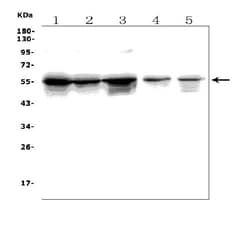
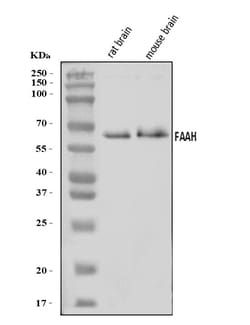
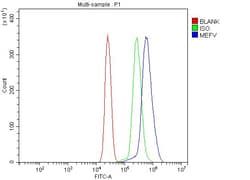
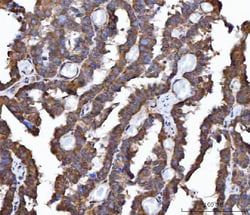
Description
- Adding 0.2 mL of distilled water will yield a concentration of 500 μg/mL
- This gene encodes an integral protein of the inner mitochondrial membrane
- The enzyme couples hydride transfer between NAD(H) and NADP(+) to proton translocation across the inner mitochondrial membrane
- Under most physiological conditions, the enzyme uses energy from the mitochondrial proton gradient to produce high concentrations of NADPH
- The resulting NADPH is used for biosynthesis and in free radical detoxification.