TTC8 Polyclonal Antibody, Invitrogen™
Manufacturer: Thermo Scientific
Select a Size
| Pack Size | SKU | Availability | Price |
|---|---|---|---|
| Each of 1 | PIPA5143970-Each-of-1 | In Stock | ₹ 35,422.00 |
PIPA5143970 - Each of 1
In Stock
Quantity
1
Base Price: ₹ 35,422.00
GST (18%): ₹ 6,375.96
Total Price: ₹ 41,797.96
Antigen
TTC8
Classification
Polyclonal
Conjugate
Unconjugated
Gene
TTC8
Gene Alias
0610012F22Rik; AV001447; Bardet-Biedl syndrome 8 protein; Bardet-Biedl syndrome 8 protein homolog; Bardet-Biedl syndrome type 8; BBS8; RP51; tetratricopeptide repeat domain 8; tetratricopeptide repeat protein 8; TPR repeat protein 8; TTC8
Host Species
Rabbit
Purification Method
Antigen affinity chromatography
Regulatory Status
RUO
Gene ID (Entrez)
123016, 299246, 76260
Content And Storage
Store at 4°C short term. For long term storage, store at -20°C, avoiding freeze/thaw cycles.
Isotype
IgG
Applications
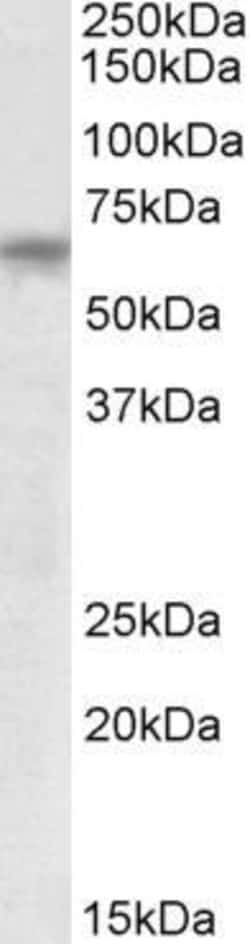
ELISA, Flow Cytometry, Western Blot
Concentration
500 μg/mL
Formulation
PBS with 4MG trehalose and no preservative
Gene Accession No.
Q8TAM2, Q8VD72
Gene Symbols
TTC8
Immunogen
E.coli-derived human BBS8/TTC8 recombinant protein (Position: E271-Q533).
Quantity
100 μg
Primary or Secondary
Primary
Target Species
Human, Mouse, Rat
Form
Lyophilized
Related Products



Description
- Adding 0.2 mL of distilled water will yield a concentration of 500 μg/mL
- This gene encodes a protein that has been directly linked to Bardet-Biedl syndrome
- The primary features of this syndrome include retinal dystrophy, obesity, polydactyly, renal abnormalities and learning disabilities
- Experimentation in non-human eukaryotes suggests that this gene is expressed in ciliated cells and that it is involved in the formation of cilia
- Alternate transcriptional splice variants have been characterized.