HSPB8 Polyclonal Antibody, Invitrogen™
Manufacturer: Thermo Scientific
Select a Size
| Pack Size | SKU | Availability | Price |
|---|---|---|---|
| Each of 1 | PIPA517105-Each-of-1 | In Stock | ₹ 40,851.00 |
PIPA517105 - Each of 1
In Stock
Quantity
1
Base Price: ₹ 40,851.00
GST (18%): ₹ 7,353.18
Total Price: ₹ 48,204.18
Antigen
HSPB8
Classification
Polyclonal
Formulation
0.01M HEPES with 0.15M NaCl, 100μg/mL BSA, 50% glycerol and no preservative; pH 7.5
Gene Accession No.
Q9EPX0, Q9JK92, Q9UJY1
Gene Symbols
HSPB8
Immunogen
Synthetic peptide corresponding to human HSPB8/HSP22
Quantity
100 μL
Primary or Secondary
Primary
Target Species
Human, Mouse, Non-human Primate, Rat
Product Type
Antibody
Isotype
IgG
Applications
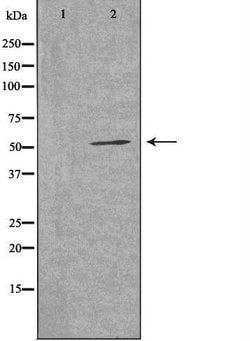
Immunocytochemistry, Western Blot
Conjugate
Unconjugated
Gene
HSPB8
Gene Alias
Alpha-crystallin C chain; AU018630; AW413033; CMT2L; Cryac; crystallin, alpha C; D5Ucla4; DHMN 2; DHMN2; E2IG1; E2-induced gene 1 protein; H11; H11K; heat shock 22kDa protein 8; heat shock 27kDa protein 8; Heat shock protein; heat shock protein 8; heat shock protein B8; heat shock protein beta-8; heat shock protein family B (small) member 8; HMN 2; HMN2; HMN2A; HSB8; HSP; HSP20-like; Hsp22; HSPB 8; Hspb8; OTTHUMP00000239768; PP1629; Protein kinase H11; small stress protein-like protein HSP22
Host Species
Rabbit
Purification Method
Antigen affinity chromatography
Regulatory Status
RUO
Gene ID (Entrez)
113906, 26353, 80888
Content And Storage
-20°C
Form
Liquid
Related Products



Description
- It is not recommended to aliquot this antibody
- The protein encoded by this gene belongs to the superfamily of small heat-shock proteins containing a conservative alpha-crystallin domain at the C-terminal part of the molecule
- The expression of this gene in induced by estrogen in estrogen receptor-positive breast cancer cells, and this protein also functions as a chaperone in association with Bag3, a stimulator of macroautophagy
- Thus, this gene appears to be involved in regulation of cell proliferation, apoptosis, and carcinogenesis, and mutations in this gene have been associated with different neuromuscular diseases, including Charcot-Marie-Tooth disease.