PIPA519286
BST-2 Polyclonal Antibody, Invitrogen™
Manufacturer: Thermo Scientific
Select a Size
| Pack Size | SKU | Availability | Price |
|---|---|---|---|
| Each of 1 | PIPA519286-Each-of-1 | In Stock | ₹ 46,591.50 |
PIPA519286 - Each of 1
In Stock
Quantity
1
Base Price: ₹ 46,591.50
GST (18%): ₹ 8,386.47
Total Price: ₹ 54,977.97
Antigen
BST-2
Classification
Polyclonal
Conjugate
Unconjugated
Gene
Bst2
Gene Alias
2310015I10Rik; bone marrow stromal antigen 2; bone marrow stromal cell antigen 2; Bst2; BST-2; C87040; CD317; Damp1; DAMP-1; DAMP-1 protein homolog; GREG; HM1.24 antigen; NPC-A-7; PDCA-1; protein DAMP-1; TETHERIN
Host Species
Goat
Purification Method
Ammonium sulfate precipitation
Regulatory Status
RUO
Gene ID (Entrez)
684
Content And Storage
-20° C, Avoid Freeze/Thaw Cycles
Form
Liquid
Applications
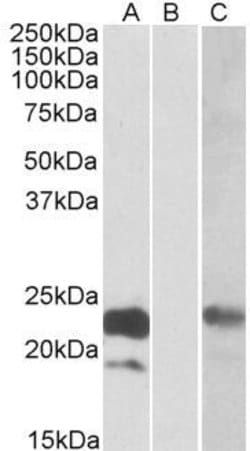
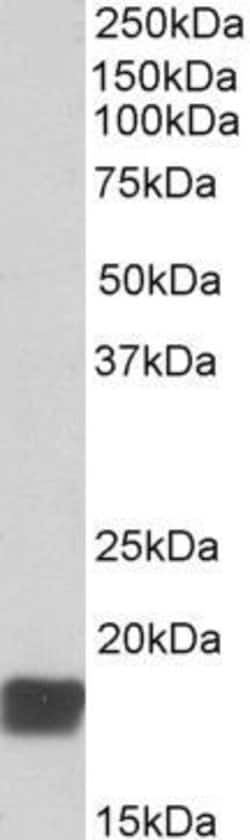
Western Blot
Concentration
0.5 mg/mL
Formulation
TBS with 0.5% BSA and 0.02% sodium azide; pH 7.3
Gene Accession No.
Q10589
Gene Symbols
Bst2
Immunogen
Synthetic peptide sequence (ELTEAQKGFQD) corresponding to the internal amino acids of BST2
Quantity
100 μg
Primary or Secondary
Primary
Target Species
Human
Product Type
Antibody
Isotype
IgG
Related Products



Description
- This antibody is tested in Peptide ELISA: antibody detection limit dilution 32,000
- BST2 (CD317, HM1.24 antigen, DAMP-2, tetherin) is an integral membrane protein that is involved in the development and growth of B-cells
- The surface expression of BST2 on fibroblast cell lines facilitated the stromal cell-dependent growth of DW34, a pre-B-cell line
- BST2 is highly expressed during B-cell development, from pro-B precursors to plasma cells, T-cells, monocytes, NK cells and DCs (at protein level), and myeloma cells
- Research studies have shown that BST2 also functions as an inhibitor of retrovirus release from human cells whose activity is antagonized by the HIV-1 accessory protein, Vpu
- While BST2 causes retention of virions on cell surfaces or endocytosis into BST2-positive compartments, its depletion abolished the viral requirement for Vpu for virus release, an activity that may represent a potential therapeutic strategy for the treatment of HIV/AIDS
- Another disease associated with BST2 dysfunction is stomatitis.