PADI2 Polyclonal Antibody, Invitrogen™
Manufacturer: Thermo Scientific
Select a Size
| Pack Size | SKU | Availability | Price |
|---|---|---|---|
| Each of 1 | PIPA519474-Each-of-1 | In Stock | ₹ 52,065.00 |
PIPA519474 - Each of 1
In Stock
Quantity
1
Base Price: ₹ 52,065.00
GST (18%): ₹ 9,371.70
Total Price: ₹ 61,436.70
Antigen
PADI2
Classification
Polyclonal
Conjugate
Unconjugated
Gene
PADI2
Gene Alias
KIAA0994; mKIAA0994; PAD type II; Pad2; PAD-H19; PADI2; Pdi; PDI2; peptidyl arginine deiminase 2; peptidyl arginine deiminase, type 2; peptidyl arginine deiminase, type II; peptidyl arginine deiminase, type II; PAD type II; peptidylarginine deiminase II; Protein-arginine deiminase type II; protein-arginine deiminase type-2; RP1-37C10.6
Host Species
Rabbit
Purification Method
Antigen affinity chromatography
Regulatory Status
RUO
Gene ID (Entrez)
11240, 29511
Content And Storage
Store at 4°C short term. For long term storage, store at -20°C, avoiding freeze/thaw cycles.
Form
Liquid
Applications
Immunocytochemistry, Western Blot
Concentration
0.9 mg/mL
Formulation
PBS with 1% BSA and 0.02% sodium azide; pH 7.4
Gene Accession No.
P20717, Q9Y2J8
Gene Symbols
PADI2
Immunogen
Synthetic peptide conjugated to KLH derived from within residues 100 - 200 of Human PADI2 / PAD2.
Quantity
100 μg
Primary or Secondary
Primary
Target Species
Human, Rat
Product Type
Antibody
Isotype
IgG
Related Products




Description
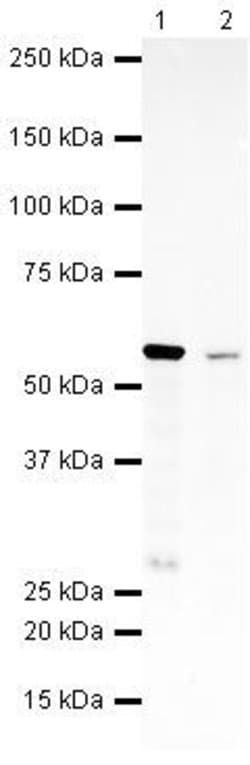
- For Western Blot, this antibody has non-specific bands at 34 kDa
- Heat mediated antigen retrieval recommended prior to tissue staining
- This gene encodes a member of the peptidyl arginine deiminase family of enzymes, which catalyze the post-translational deimination of proteins by converting arginine residues into citrullines in the presence of calcium ions
- The family members have distinct substrate specificities and tissue-specific expression patterns
- The type II enzyme is the most widely expressed family member
- Known substrates for this enzyme include myelin basic protein in the central nervous system and vimentin in skeletal muscle and macrophages
- This enzyme is thought to play a role in the onset and progression of neurodegenerative human disorders, including Alzheimer disease and multiple sclerosis, and it has also been implicated in glaucoma pathogenesis
- This gene exists in a cluster with four other paralogous genes.