CTRP6 Polyclonal Antibody, Invitrogen™
Manufacturer: Thermo Scientific
Select a Size
| Pack Size | SKU | Availability | Price |
|---|---|---|---|
| Each of 1 | PIPA520154-Each-of-1 | In Stock | ₹ 46,591.50 |
PIPA520154 - Each of 1
In Stock
Quantity
1
Base Price: ₹ 46,591.50
GST (18%): ₹ 8,386.47
Total Price: ₹ 54,977.97
Antigen
CTRP6
Classification
Polyclonal
Conjugate
Unconjugated
Gene
C1QTNF6
Gene Alias
2810036M19Rik; C1q and tumor necrosis factor related protein 6; C1qtnf6; Complement C1q tumor necrosis factor-related protein 6; complement-c1q tumor necrosis factor-related protein 6; CTFP6; CTRP6; UNQ581/PRO1151; ZACRP6
Host Species
Rabbit
Purification Method
Antigen affinity chromatography
Regulatory Status
RUO
Gene ID (Entrez)
114904, 72709
Content And Storage
Maintain refrigerated at 2-8°C for up to 3 months. For long term storage store at -20°C
Form
Liquid
Applications
Immunocytochemistry, Western Blot
Concentration
1 mg/mL
Formulation
PBS with 0.02% sodium azide
Gene Accession No.
Q6IR41, Q9BXI9
Gene Symbols
C1QTNF6
Immunogen
A 15 amino acid peptide from near the carboxy terminus of human CTRP6.
Quantity
100 μg
Primary or Secondary
Primary
Target Species
Human, Mouse
Product Type
Antibody
Isotype
IgG
Related Products
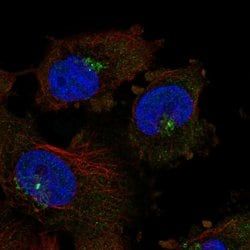


Description
- A suggested positive control is Hela cell lysate
- PA5-20154 can be used with blocking peptide PEP-0273
- Adipose tissue of an organism plays a major role in regulating physiologic and pathologic processes such as metabolism and immunity by producing and secreting a variety of bioactive molecules termed adipokines
- One highly conserved family of adipokines is adiponectin/ACRP30 and its structural and functional paralogs, the C1q/tumor necrosis factor-alpha-related proteins (CTRPs) 1-7
- Unlike adiponectin, which is expressed exclusively by differentiated adipocytes, the CTRPs are expressed in a wide variety of tissues
- These proteins are thought to act mainly on liver and muscle tissue to control glucose and lipid metabolism
- An analysis of the crystal structure of adiponectin revealed a structural and evolutionary link between TNF and C1q-containing proteins, suggesting that these proteins arose from a common ancestral innate immunity gene
- CTRP6 contains at least 4 glycosylation motifs, suggesting that CTRP6 may be highly post-translationally modified.