LRRTM4 Polyclonal Antibody, Invitrogen™
Manufacturer: Thermo Scientific
Select a Size
| Pack Size | SKU | Availability | Price |
|---|---|---|---|
| Each of 1 | PIPA521101-Each-of-1 | In Stock | ₹ 46,502.50 |
PIPA521101 - Each of 1
In Stock
Quantity
1
Base Price: ₹ 46,502.50
GST (18%): ₹ 8,370.45
Total Price: ₹ 54,872.95
Antigen
LRRTM4
Classification
Polyclonal
Conjugate
Unconjugated
Gene
LRRTM4
Gene Alias
7530419J18Rik; A230052N11; FLJ12568; leucine rich repeat transmembrane neuronal 4; leucine-rich repeat transmembrane neuronal 4 protein; leucine-rich repeat transmembrane neuronal protein 4; LRRTM4; MGC120633; MGC120636; RGD1560707; UNQ3075/PRO9907
Host Species
Rabbit
Purification Method
Antigen affinity chromatography
Regulatory Status
RUO
Gene ID (Entrez)
80059
Content And Storage
Maintain refrigerated at 2-8°C for up to 3 months. For long term storage store at -20°C
Form
Liquid
Applications
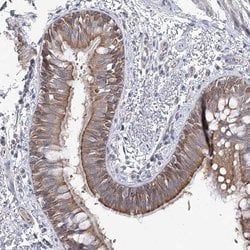
Immunohistochemistry, Western Blot
Concentration
1 mg/mL
Formulation
PBS with 0.02% sodium azide
Gene Accession No.
Q86VH4
Gene Symbols
LRRTM4
Immunogen
A 16 amino acid peptide near the center of human LRRTM4.
Quantity
100 μg
Primary or Secondary
Primary
Target Species
Human
Product Type
Antibody
Isotype
IgG
Related Products





Description
- A suggested positive control is Hela cell lysate
- PA5-21101 can be used with blocking peptide PEP-1215
- The Leucine-rich repeat transmembrane neuronal proteins (LRRTMs) are differentially expressed in the nervous system and were recently found to instruct presynaptic and mediate postsynaptic glutamatergic differentiation, with LRRTM1 and LRRTM2 most potent at inducing presynaptic differentiation
- Little is known about the function of LRRTM4; in mouse, it is expressed in the limb mesenchyme, neural tube, caudal mesoderm and in three distinct regions of the head
- Later expression occurs in a subset of the developing sclerotome
- Its similarity to other LRRTM family members suggests that LRRTM4 may also play a role in the development and maintenance of the vertebrate nervous system.