SGSH Polyclonal Antibody, Invitrogen™
Manufacturer: Thermo Scientific
Select a Size
| Pack Size | SKU | Availability | Price |
|---|---|---|---|
| Each of 1 | PIPA521374-Each-of-1 | In Stock | ₹ 49,439.50 |
PIPA521374 - Each of 1
In Stock
Quantity
1
Base Price: ₹ 49,439.50
GST (18%): ₹ 8,899.11
Total Price: ₹ 58,338.61
Antigen
SGSH
Classification
Polyclonal
Conjugate
Unconjugated
Gene
SGSH
Gene Alias
4632406A19Rik; heparan sulfate sulfamidase; heparan sulfate sulfatase; HSS; MPS3A; mucopolysaccharidosis type IIIA; N-sulfoglucosamine sulfohydrolase; N-sulfoglucosamine sulfohydrolase (sulfamidase); N-sulphoglucosamine sulphohydrolase; SFMD; SGSH; Sulfoglucosamine sulfamidase; sulphamidase
Host Species
Rabbit
Purification Method
Antigen affinity chromatography
Regulatory Status
RUO
Gene ID (Entrez)
6448
Content And Storage
Store at 4°C short term. For long term storage, store at -20°C, avoiding freeze/thaw cycles.
Form
Liquid
Applications
Immunohistochemistry (Paraffin), Western Blot
Concentration
1 mg/mL
Formulation
0.1M tris glycine with 10% glycerol and 0.01% thimerosal; pH 7
Gene Accession No.
P51688
Gene Symbols
SGSH
Immunogen
Recombinant fragment corresponding to a region within amino acids 318 and 496 of SGSH (Uniprot ID#P51688)
Quantity
100 μL
Primary or Secondary
Primary
Target Species
Human
Product Type
Antibody
Isotype
IgG
Related Products

Description
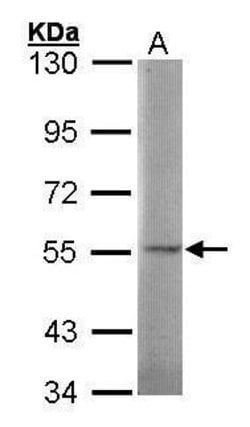
- Recommended positive controls: A431, Molt-4
- Predicted reactivity: Mouse (81%), Dog (82%), Bovine (81%)
- Store product as a concentrated solution
- Centrifuge briefly prior to opening the vial
- SGSH is one of several enzymes involved in the lysosomal degradation of heparan sulfate
- Mutations in this gene are associated with Sanfilippo syndrome A, one type of the lysosomal storage disease mucopolysaccaridosis III, which results from impaired degradation of heparan sulfate
- Transcripts of varying sizes have been reported but their biological validity has not been determined.