NUP153 Polyclonal Antibody, Invitrogen™
Manufacturer: Thermo Scientific
Select a Size
| Pack Size | SKU | Availability | Price |
|---|---|---|---|
| Each of 1 | PIPA526125-Each-of-1 | In Stock | ₹ 46,591.50 |
PIPA526125 - Each of 1
In Stock
Quantity
1
Base Price: ₹ 46,591.50
GST (18%): ₹ 8,386.47
Total Price: ₹ 54,977.97
Antigen
NUP153
Classification
Polyclonal
Conjugate
Unconjugated
Gene
NUP153
Gene Alias
153 kDa nucleoporin; B130015D15Rik; C88147; HNUP153; N153; nuclear pore complex protein hnup153; nuclear pore complex protein Nup153; nucleoporin 153; nucleoporin 153kD; nucleoporin 153kDa; nucleoporin 153kDa L homeolog; nucleoporin Nup153; nucleoporin Nup153 homolog; NUCZINK; nup153; nup153.L; XELAEV_18031694mg
Host Species
Rabbit
Purification Method
Ammonium sulfate precipitation, Size-exclusion - Dialysis
Regulatory Status
RUO
Gene ID (Entrez)
9972
Content And Storage
-20° C, Avoid Freeze/Thaw Cycles
Form
Liquid
Applications
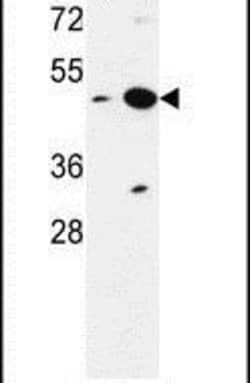
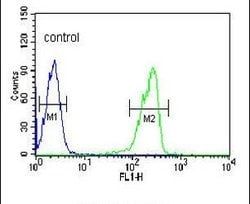
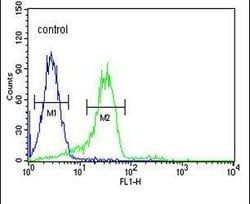
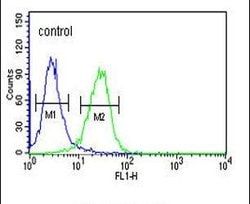
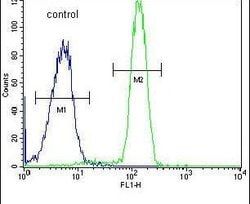
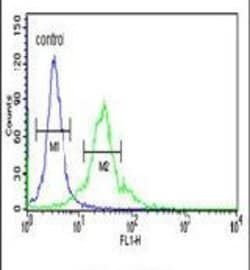
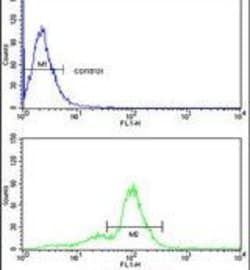
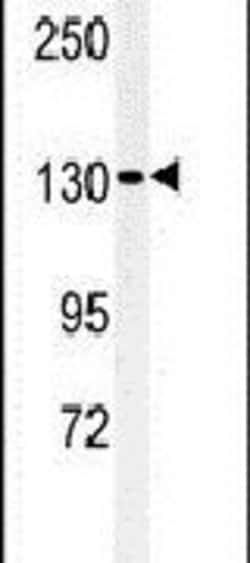
Flow Cytometry, Western Blot
Concentration
2 mg/mL
Formulation
PBS with 0.09% sodium azide
Gene Accession No.
P49790
Gene Symbols
NUP153
Immunogen
KLH conjugated synthetic peptide between 58-86 amino acids from the N-terminal region of human NUP153
Quantity
400 μL
Primary or Secondary
Primary
Target Species
Human
Product Type
Antibody
Isotype
IgG
Related Products
Description
- Nuclear pore complexes regulate the transport of macromolecules between the nucleus and cytoplasm
- They are composed of at least 100 different polypeptide subunits, many of which belong to the nucleoporin family
- Nucleoporins are glycoproteins found in nuclear pores and contain characteristic pentapeptide XFXFG repeats as well as O-linked N-acetylglucosamine residues oriented towards the cytoplasm
- The protein encoded by this gene has three distinct domains: a N-terminal region containing a pore targeting and an RNA-binding domain, a central region containing multiple zinc finger motifs, and a C-terminal region containing multiple XFXFG repeats
- Alternative splicing results in multiple transcript variants of this gene.