PIPA527258
TLR9 Polyclonal Antibody, Invitrogen™
Manufacturer: Thermo Scientific
Select a Size
| Pack Size | SKU | Availability | Price |
|---|---|---|---|
| Each of 1 | PIPA527258-Each-of-1 | In Stock | ₹ 49,706.50 |
PIPA527258 - Each of 1
In Stock
Quantity
1
Base Price: ₹ 49,706.50
GST (18%): ₹ 8,947.17
Total Price: ₹ 58,653.67
Antigen
TLR9
Classification
Polyclonal
Conjugate
Unconjugated
Gene
Tlr9
Gene Alias
CD289; Tlr9; toll like receptor 9; toll-like receptor 9; UNQ5798/PRO19605
Host Species
Rabbit
Purification Method
Antigen affinity chromatography
Regulatory Status
RUO
Gene ID (Entrez)
54106, 81897
Content And Storage
Store at 4°C short term. For long term storage, store at -20°C, avoiding freeze/thaw cycles.
Form
Liquid
Applications
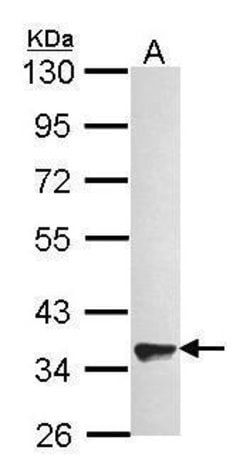
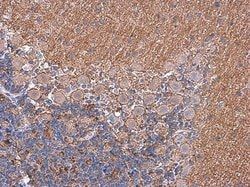
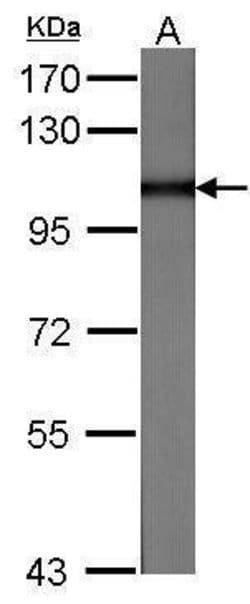
Immunohistochemistry (Paraffin), Western Blot
Concentration
0.4 mg/mL
Formulation
0.1M tris glycine with 10% glycerol and 0.01% thimerosal; pH 7
Gene Accession No.
Q9EQU3, Q9NR96
Gene Symbols
Tlr9
Immunogen
Synthetic peptide corresponding to a region within amino acids 218 and 314 of Human TLR9
Quantity
100 μL
Primary or Secondary
Primary
Target Species
Human, Mouse
Product Type
Antibody
Isotype
IgG
Related Products
Description
- Recommended positive controls: THP-1, Recombinant TLR9 protein
- Predicted reactivity: Rhesus Monkey (100%)
- Store product as a concentrated solution
- Centrifuge briefly prior to opening the vial
- The protein encoded by this gene is a member of the Toll-like receptor family which plays a fundamental role in pathogen recognition and activation of innate immunity
- TLRs are highly conserved from Drosophila to humans and share structural and functional similarities
- They recognize pathogen-associated molecular patterns that are expressed on infectious agents, and mediate the production of cytokines necessary for the development of effective immunity
- The various TLRs exhibit different patterns of expression
- This gene is preferentially expressed in immune cell rich tissues, such as spleen, lymph node, bone marrow and peripheral blood leukocytes
- Studies in mice and human indicate that this receptor mediates cellular response to unmethylated CpG dinucleotides in bacterial DNA to mount an innate immune response.