CARD10 Polyclonal Antibody, Invitrogen™
Manufacturer: Thermo Scientific
Select a Size
| Pack Size | SKU | Availability | Price |
|---|---|---|---|
| Each of 1 | PIPA529261-Each-of-1 | In Stock | ₹ 46,413.50 |
PIPA529261 - Each of 1
In Stock
Quantity
1
Base Price: ₹ 46,413.50
GST (18%): ₹ 8,354.43
Total Price: ₹ 54,767.93
Antigen
CARD10
Classification
Polyclonal
Conjugate
Unconjugated
Gene
CARD10
Gene Alias
AI449026; Bcl10 binding protein and activator of NFKB; bcl10-interacting MAGUK protein 1; Bimp1; Card10; CARD-containing MAGUK 3 protein; CARD-containing MAGUK protein 3; Carma 3; Carma3; caspase recruitment domain family member 10; caspase recruitment domain family, member 10; caspase recruitment domain-containing protein 10
Host Species
Rabbit
Purification Method
Antigen affinity chromatography
Regulatory Status
RUO
Gene ID (Entrez)
105844, 29775
Content And Storage
Store at 4°C short term. For long term storage, store at -20°C, avoiding freeze/thaw cycles.
Form
Liquid
Applications
Immunohistochemistry (Frozen), Immunohistochemistry (Paraffin), Western Blot
Concentration
1 mg/mL
Formulation
PBS with 20% glycerol and 0.01% thimerosal, 0.025% ProClin 300; pH 7
Gene Accession No.
P58660, Q9BWT7
Gene Symbols
CARD10
Immunogen
Recombinant fragment corresponding to a region within amino acids 341 and 630 of Human CARD10
Quantity
100 μL
Primary or Secondary
Primary
Target Species
Human, Mouse
Product Type
Antibody
Isotype
IgG
Related Products
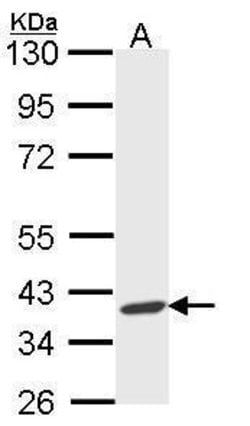


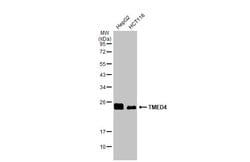
Description
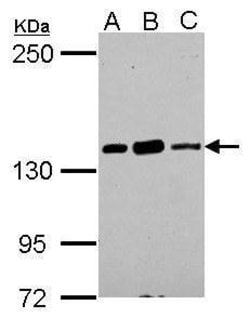
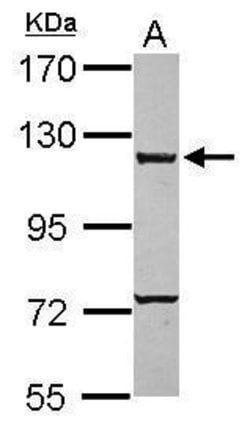
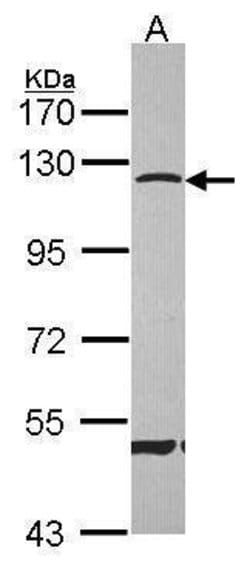
- Recommended positive controls: 293T, H1299, Molt-4, Raji, mouse heart
- Predicted reactivity: Mouse (94%), Rat (93%)
- Store product as a concentrated solution
- Centrifuge briefly prior to opening the vial
- CARMA proteins belong to the membrane-associated guanylate kinase-like (MAGUK) family of proteins that can function as molecular scaffolds that assist assembly of signal transduction molecules
- CARMA1, CARMA2, and CARMA3 share high degrees of sequence and functional homology, but their tissue-specific distribution suggests that they serve distinct biological functions in different cell types
- As with CARMA1, the CARD domain of CARMA3 has been shown to specifically interact with BCL10, a protein known to function as a positive regulator of cell apoptosis and NF-Kappa-B activation
- When expressed in cells, this protein binds to BCL10 and activates NF-Kappa-B Recent experiments have shown that CARMA3 is required for EGF-induced NF-Kappa-B activation and contributes to tumor growth in vivo, suggesting that CARMA3 may serve as a new therapeutic target for the treatment of EGFR-driven tumors.