LOK Polyclonal Antibody, Invitrogen™
Manufacturer: Thermo Scientific
Select a Size
| Pack Size | SKU | Availability | Price |
|---|---|---|---|
| Each of 1 | PIPA529403-Each-of-1 | In Stock | ₹ 47,392.50 |
PIPA529403 - Each of 1
In Stock
Quantity
1
Base Price: ₹ 47,392.50
GST (18%): ₹ 8,530.65
Total Price: ₹ 55,923.15
Antigen
LOK
Classification
Polyclonal
Conjugate
Unconjugated
Gene
stk10
Gene Alias
Gek1; germ cell kinase 1; Lok; Lymphocyte-oriented kinase; mKIAA4026; PRO2729; serine/threonine kinase 10; serine/threonine-protein kinase 10; similar to serine/threonine kinase 10; STK10; zgc:63495
Host Species
Rabbit
Purification Method
Antigen affinity chromatography
Regulatory Status
RUO
Gene ID (Entrez)
6793
Content And Storage
Store at 4°C short term. For long term storage, store at -20°C, avoiding freeze/thaw cycles.
Form
Liquid
Applications
Western Blot
Concentration
0.53 mg/mL
Formulation
PBS with 1% BSA, 20% glycerol and 0.01% thimerosal; pH 7
Gene Accession No.
O94804
Gene Symbols
stk10
Immunogen
Recombinant fragment corresponding to a region within amino acids 643 and 957 of Human LOK
Quantity
100 μL
Primary or Secondary
Primary
Target Species
Human
Product Type
Antibody
Isotype
IgG
Related Products


Description
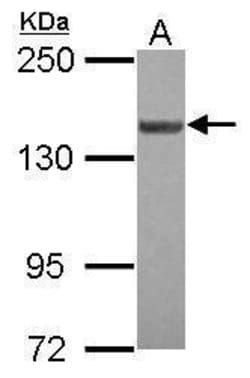
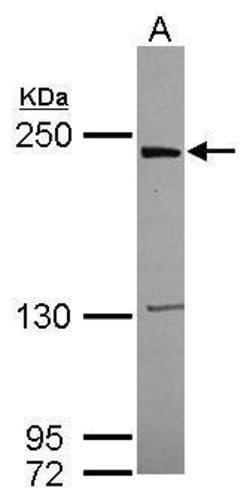
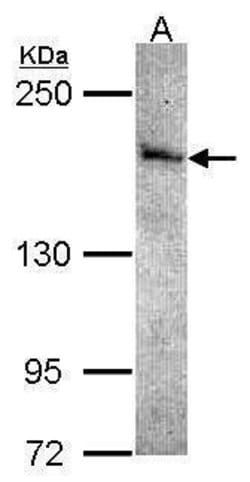
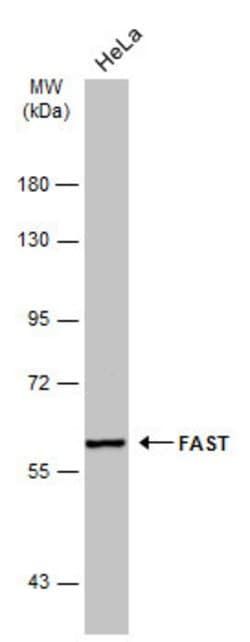
- Recommended positive controls: 293T, A431, HeLa, Raji
- Predicted reactivity: Mouse (94%), Rat (93%), Chicken (82%), Bovine (96%)
- Store product as a concentrated solution
- Centrifuge briefly prior to opening the vial
- Ubiquitin: exists either covalently attached to another protein, or free (unanchored)
- When covalently bound, it is conjugated to target proteins via an isopeptide bond either as a monomer (monoubiquitin), a polymer linked via different Lys residues of the ubiquitin (polyubiquitin chains) or a linear polymer linked via the initiator Met of the ubiquitin (linear polyubiquitin chains)
- Polyubiquitin chains, when attached to a target protein, have different functions depending on the Lys residue of the ubiquitin that is linked: Lys-6-linked may be involved in DNA repair; Lys-11-linked is involved in ERAD (endoplasmic reticulum-associated degradation) and in cell-cycle regulation; Lys-29-linked is involved in lysosomal degradation; Lys-33-linked is involved in kinase modification; Lys-48-linked is involved in protein degradation via the proteasome; Lys-63-linked is involved in endocytosis, DNA-damage responses as well as in signaling processes leading to activation of the transcription factor NF-kappa-B
- Linear polymer chains formed via attachment by the initiator Met lead to cell signaling
- Ubiquitin is usually conjugated to Lys residues of target proteins, however, in rare cases, conjugation to Cys or Ser residues has been observed
- When polyubiquitin is free (unanchored-polyubiquitin), it also has distinct roles, such as in activation of protein kinases, and in signaling
- 60S ribosomal protein L40: component of the 60S subunit of the ribosome
- Ribosomal protein L40 is essential for translation of a subset of cellular transcripts, and especially for cap-dependent translation of vesicular stomatitis virus mRNAs.