CD44 Polyclonal Antibody, Invitrogen™
Manufacturer: Thermo Scientific
Select a Size
| Pack Size | SKU | Availability | Price |
|---|---|---|---|
| Each of 1 | PIPA529590-Each-of-1 | In Stock | ₹ 52,154.00 |
PIPA529590 - Each of 1
In Stock
Quantity
1
Base Price: ₹ 52,154.00
GST (18%): ₹ 9,387.72
Total Price: ₹ 61,541.72
Antigen
CD44
Classification
Polyclonal
Conjugate
Unconjugated
Gene
CD44
Gene Alias
AU023126; AW121933; AW146109; Bovine CD44; CD44; CD44 antigen; CD44 antigen-like protein; CD44 molecule; CD44 molecule (Indian blood group); CD44 protein; CD44 variant; CD44A; CD44-like protein; CDW44; cell surface glycoprotein CD44; Cell surface glycoprotein CD44 (hyaluronate binding protein); cell-surface glycoprotein; chondroitin sulfate proteoglycan 8; CSPG8; ECMRIII; ECMR-III; Epican; extracellular matrix receptor III; extracellular matrix receptor-III; GP90 lymphocyte homing/adhesion receptor; HCELL; hematopoietic cell E- and L-selectin ligand; heparan sulfate proteoglycan; HERMES; Hermes antigen; homing function and Indian blood group system; HUTCH-I; hyaluronan receptor; Hyaluronate receptor; IN; LHR; Ly-24; lymphocyte antigen 24; lymphocyte surface antigen precursor CD44; MC56; MDU2; MDU3; METAA; MIC4; PGP I; Pgp1; PGP-1; PGPI; PGP-I; Phagocytic glycoprotein 1; phagocytic glycoprotein I; putative Bos taurus CD44; RHAMM; sCD 44; sCD44; soluble CD 44; soluble CD44
Host Species
Rabbit
Purification Method
Antigen affinity chromatography
Regulatory Status
RUO
Gene ID (Entrez)
25406, 960
Content And Storage
Store at 4°C short term. For long term storage, store at -20°C, avoiding freeze/thaw cycles.
Form
Liquid
Applications
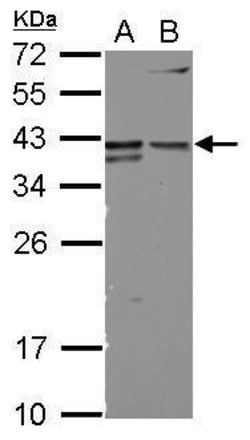
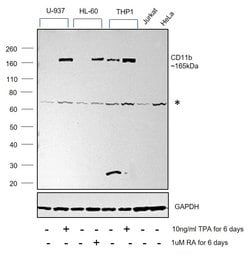
Immunohistochemistry (Paraffin), Western Blot
Concentration
0.65 mg/mL
Formulation
0.1M tris glycine with 10% glycerol and 0.01% thimerosal; pH 7
Gene Accession No.
P16070, P26051
Gene Symbols
CD44
Immunogen
Recombinant fragment corresponding to a region within amino acids 1 and 199 of Human CD44
Quantity
100 μL
Primary or Secondary
Primary
Target Species
Human, Rat
Product Type
Antibody
Isotype
IgG
Related Products

Description
- Recommended positive controls: HeLa
- Predicted reactivity: Mouse (87%), Rat (88%), Dog (93%), Bovine (93%)
- Store product as a concentrated solution
- Centrifuge briefly prior to opening the vial
- CD44 cell surface antigen is a 100 kDa type 1 transmembrane glycoprotein widely expressed on human leucocytes, white matter of the brain and by some epithelial cells of the intestine and breast
- Several isoforms of CD44 exist, including the predominant CD44H isoform detected in many normal tissues
- CD44 is a receptor for hyaluronic acid (HA) and is involved in cell-cell interactions, cell adhesion and migration
- CD44 also participates in a wide variety of cellular functions including lymphocyte activation, recirculation and homing
- CD44 expression may be up-regulated upon some carcinomas, and it has been speculated that this may be related to metastatic potential
- CD44 is expressed by hematopoietic, non-hematopoietic cells, epithelial tissues, and to filopodia in cultured keratinocytes
- Further, bone marrow myeloid cells and memory T cells express CD44 at high levels, and peripheral B and T cells can upregulate the expression of CD44 in response to certain stimulatory events
- Transcripts for the CD44 gene undergo complex alternative splicing that results in many functionally distinct isoforms, however, the full-length nature of some of these variants have not been determined
- Alternative splicing is the basis for the structural and functional diversity of the CD44 protein
- Diseases associated with CD44 dysfunction include superficial keratitis and lichen sclerosus
- CD44 also may be related to tumor metastasis formation.