RGS14 Polyclonal Antibody, Invitrogen™
Manufacturer: Thermo Scientific
Select a Size
| Pack Size | SKU | Availability | Price |
|---|---|---|---|
| Each of 1 | PIPA530397-Each-of-1 | In Stock | ₹ 48,015.50 |
PIPA530397 - Each of 1
In Stock
Quantity
1
Base Price: ₹ 48,015.50
GST (18%): ₹ 8,642.79
Total Price: ₹ 56,658.29
Antigen
RGS14
Classification
Polyclonal
Conjugate
Unconjugated
Gene
Rgs14
Gene Alias
rap1/rap2 interacting protein; RAP1/RAP2-interacting protein; Regulator of G-protein signaling 14; regulator of G-protein signalling 14; RGS14; RGSE; RPIP1
Host Species
Rabbit
Purification Method
Antigen affinity chromatography
Regulatory Status
RUO
Gene ID (Entrez)
10636, 51791
Content And Storage
Store at 4°C short term. For long term storage, store at -20°C, avoiding freeze/thaw cycles.
Form
Liquid
Applications
Immunohistochemistry (Paraffin), Western Blot
Concentration
0.7 mg/mL
Formulation
0.1M tris glycine with 20% glycerol and 0.01% thimerosal; pH 7
Gene Accession No.
O43566, P97492
Gene Symbols
Rgs14
Immunogen
Recombinant fragment corresponding to a region within amino acids 1 and 193 of Human RGS14
Quantity
100 μL
Primary or Secondary
Primary
Target Species
Human, Mouse
Product Type
Antibody
Isotype
IgG
Related Products
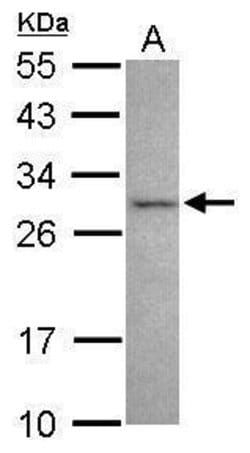
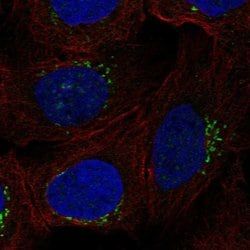


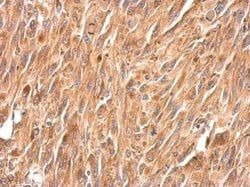
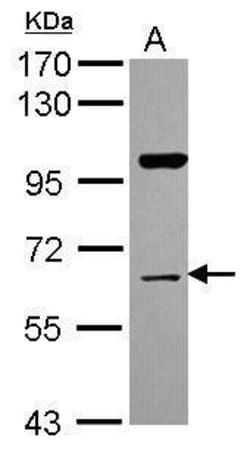
Description
- Recommended positive controls: 293T, A431, Jurkat, Raji
- Predicted reactivity: Mouse (91%), Rat (90%), Bovine (99%)
- Store product as a concentrated solution
- Centrifuge briefly prior to opening the vial
- RGS14 is a member of the regulator of G-protein signaling family which contains one RGS domain, two Raf-like Ras-binding domains (RBDs), and one GoLoco domain
- RGS14 attenuates the signaling activity of G-proteins by binding, through its GoLoco domain, to specific types of activated, GTP-bound G alpha subunits
- Acting as a GTPase activating protein (GAP), the protein increases the rate of conversion of the GTP to GDP
- The resulting hydrolysis allows the G alpha subunits to bind G beta/gamma subunit heterodimers, forming inactive G-protein heterotrimers, thereby terminating the signal
- Alternate transcriptional splice variants of RGS14 have been observed but have not been thoroughly characterized
- Further, RGS14 acts as a positive modulator of microtubule polymerisation and spindle organization through a G(i)-alpha-dependent mechanism; plays a role in cell division; is required for the nerve growth factor (NGF)-mediated neurite outgrowth, and is involved in stress resistance
- RGS14 protein may also be involved in visual memory processing capacity and hippocampal-based learning and memory.