PIPA531897
PHF7 Polyclonal Antibody, Invitrogen™
Manufacturer: Thermo Scientific
Select a Size
| Pack Size | SKU | Availability | Price |
|---|---|---|---|
| Each of 1 | PIPA531897-Each-of-1 | In Stock | ₹ 46,858.50 |
PIPA531897 - Each of 1
In Stock
Quantity
1
Base Price: ₹ 46,858.50
GST (18%): ₹ 8,434.53
Total Price: ₹ 55,293.03
Antigen
PHF7
Classification
Polyclonal
Conjugate
Unconjugated
Gene
PHF7
Gene Alias
1700006H01Rik; 1700010P14Rik; AI427892; AW555949; HSPC045; HSPC226; NYD-SP6; PHD finger protein 7; PHF7; testicular secretory protein Li 34; testis development protein NYD-SP6
Host Species
Rabbit
Purification Method
Antigen affinity chromatography
Regulatory Status
RUO
Gene ID (Entrez)
51533
Content And Storage
Store at 4°C short term. For long term storage, store at -20°C, avoiding freeze/thaw cycles.
Form
Liquid
Applications
Western Blot
Concentration
1 mg/mL
Formulation
PBS with 1% BSA, 20% glycerol and 0.01% thimerosal; pH 7
Gene Accession No.
Q9BWX1
Gene Symbols
PHF7
Immunogen
Recombinant protein fragment corresponding to a region within amino acids 146 and 341 of Human PHF7
Quantity
100 μL
Primary or Secondary
Primary
Target Species
Human
Product Type
Antibody
Isotype
IgG
Related Products
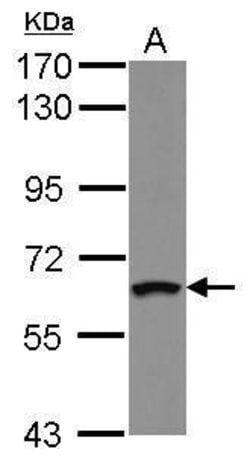
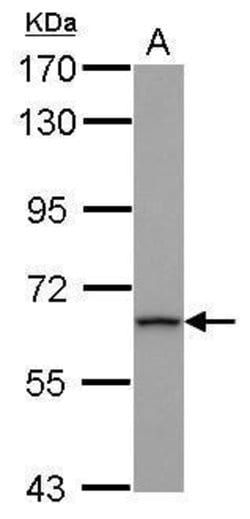
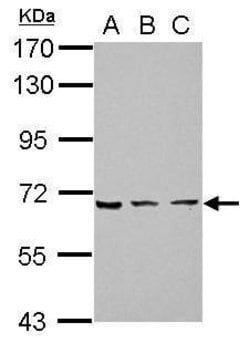
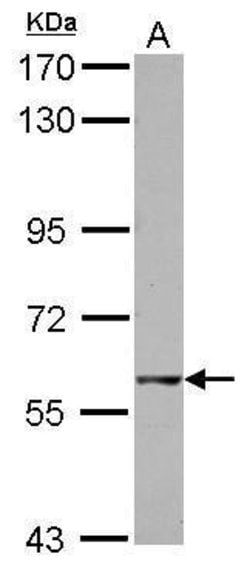
Description
- Recommended positive controls: NT2D1, SK-N-SH
- Predicted reactivity: Rat (83%), Rhesus Monkey (99%), Chimpanzee (100%)
- Store product as a concentrated solution
- Centrifuge briefly prior to opening the vial
- Spermatogenesis is a complex process regulated by extracellular and intracellular factors as well as cellular interactions among interstitial cells of the testis, Sertoli cells, and germ cells
- In the testis, this gene is expressed in Sertoli cells but not germ cells
- However, this gene is not expressed in a patient who exhibited spermatogenic arrest at the spermatocyte stage
- Spermatogenic arrest is an interruption of germ cell differentiation that may result in oligospermia or azoospermia
- The proteins encoded by this gene contain plant homeodomain (PHD) finger domains, also known as leukemia associated protein (LAP) domains, believed to be involved in transcriptional regulation
- Thus this protein, which localizes to the nucleus of transfected cells, has been implicated in the transcriptional regulation of spermatogenesis
- Two protein isoforms are encoded by transcript variants of this gene.