PIPA532238
Influenza A H1N1 NA Polyclonal Antibody, Invitrogen™
Manufacturer: Thermo Scientific
Select a Size
| Pack Size | SKU | Availability | Price |
|---|---|---|---|
| Each of 1 | PIPA532238-Each-of-1 | In Stock | ₹ 49,350.50 |
PIPA532238 - Each of 1
In Stock
Quantity
1
Base Price: ₹ 49,350.50
GST (18%): ₹ 8,883.09
Total Price: ₹ 58,233.59
Antigen
Influenza A H1N1 NA
Classification
Polyclonal
Conjugate
Unconjugated
Gene Alias
H1N1 NA; Influenza H1N1
Immunogen
Recombinant protein fragment of Influenza A virus NA (A/WSN/1933(H1N1))
Quantity
100 μL
Primary or Secondary
Primary
Content And Storage
Store at 4°C short term. For long term storage, store at -20°C, avoiding freeze/thaw cycles.
Form
Liquid
Applications
Immunocytochemistry, Western Blot
Concentration
0.28 mg/mL
Formulation
PBS with 1% BSA, 20% glycerol and 0.025% ProClin 300; pH 7
Host Species
Rabbit
Purification Method
Antigen affinity chromatography
Regulatory Status
RUO
Target Species
Virus
Product Type
Antibody
Isotype
IgG
Related Products

Description
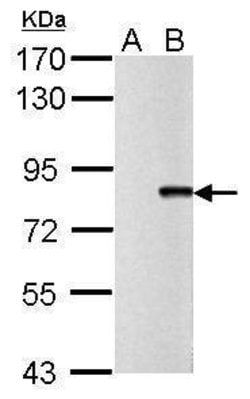
- Recommended positive controls: DF-1, WSN virus infected DF-1, influenza A virus H1N1-infected H1299
- Store product as a concentrated solution
- Centrifuge briefly prior to opening the vial
- Influenza A virus is a major public health threat, killing more than 30,000 people per year in the USA
- In early 2009, a novel swine-origin influenza A (H1N1) virus was identified in specimens obtained from patients in Mexico and the United States
- The virus spread quickly around the world and on June 11, 2009, the World Health Organization declared it a pandemic
- Influenza A virus has one of sixteen possible Hemagglutinin (HA) surface proteins and one of nine possible Neuraminidase (NA) surface proteins
- The Hemagglutinin protein facilitates viral attachment while Neuraminidase is involved in viral release
- These proteins also elicit immune responses that prevent infection or independently reduce viral replication
- The genetic make-up of this swine flu virus is unlike any other: it is an H1N1 strain that combines a triple assortment first identified in 1998 including human, swine, and avian influenza with two new pig H3N2 virus genes from Eurasia, themselves of recent human origin
- The distinct antigenic properties of the new swine influenza virus compared with seasonal influenza A (H1N1) virus suggest that human immunity against new swine influenza virus is limited, although the age distribution of reported cases suggests some degree of protection in older age groups.