GRP78 Polyclonal Antibody, Invitrogen™
Manufacturer: Thermo Scientific
Select a Size
| Pack Size | SKU | Availability | Price |
|---|---|---|---|
| Each of 1 | PIPA532437-Each-of-1 | In Stock | ₹ 43,476.50 |
PIPA532437 - Each of 1
In Stock
Quantity
1
Base Price: ₹ 43,476.50
GST (18%): ₹ 7,825.77
Total Price: ₹ 51,302.27
Antigen
GRP78
Classification
Polyclonal
Formulation
PBS with 1% BSA and 0.1% sodium azide; pH 7.6
Gene Accession No.
P11021, P20029, Q90593
Gene Symbols
Hspa5
Immunogen
Synthetic peptide corresponding to near N-terminus of human GRP78
Quantity
500 μL
Primary or Secondary
Primary
Target Species
Chicken, Human, Mouse
Product Type
Antibody
Isotype
IgG
Applications
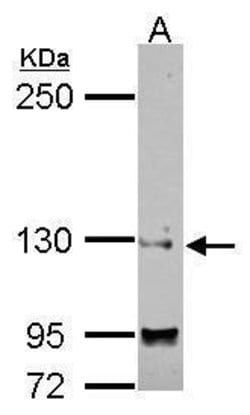
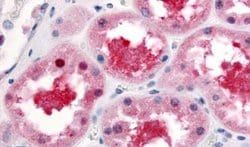
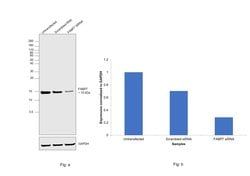
Immunocytochemistry, Immunohistochemistry (Paraffin), Western Blot
Conjugate
Unconjugated
Gene
Hspa5
Gene Alias
78 kDa glucose-regulated protein; 78 kDa glucose-regulated protein homolog; 78-kD glucose-regulated protein precursor; AL022860; AU019543; baffled; Binding-immunoglobulin protein; bip; BiP protein; BiP/Grp78; cb865; D2Wsu141e; D2Wsu17e; Endoplasmic reticulum chaperone BiP; endoplasmic reticulum chaperone BiP; 78 kDa glucose-regulated protein; endoplasmic reticulum lumenal Ca(2+)-binding protein grp78; epididymis secretory sperm binding protein Li 89n; fb60h09; fi36d04; FLJ26106; glucose regulated protein, 78 kDa; glucose-regulated protein; glucose-regulated protein, 78kDa; GRP 78; grp78; GRP-78; heat shock 70 kDa protein 5; heat shock 70 kDa protein 5a; heat shock 70kD protein 5; heat shock 70kD protein 5 (glucose-regulated protein, 78kD); heat shock 70kDa protein 5; heat shock 70kDa protein 5 (glucose-regulated protein); heat shock 70kDa protein 5 (glucose-regulated protein, 78kDa); heat shock protein 5; heat shock protein 70 family protein 5; heat shock protein family A (Hsp70) member 5; heat shock protein family A (Hsp70) member 5 L homeolog; heat shock protein family A member 5; heavy-chain binding protein BiP; HEL-S-89n; Hsce70; hsp70; Hsp70 family ATPase KAR2; HSP70 family protein 5; HSPA 5; HSPA5; hspa5.L; hspa5a; I79_019946; immunoglobulin binding protein; immunoglobulin heavy chain-binding protein; Immunoglobulin heavy chain-binding protein homolog; J1248; KAR2; mBiP; MIF2; Sez7; SEZ-7; SSD1; Steroidogenesis-activator polypeptide; wu:fb60h09; wu:fi36d04; XAP-1; XAP-1 antigen; XELAEV_180384511mg; YJL034W; zgc:55994; zgc:77606
Host Species
Rabbit
Purification Method
Antigen affinity chromatography
Regulatory Status
RUO
Gene ID (Entrez)
14828, 3309, 396487
Content And Storage
-20° C, Avoid Freeze/Thaw Cycles
Form
Liquid
Related Products

Description
- This antibody is predicted to react with bovine, chicken, canine, amphibian, mouse and rat based on sequence homology
- Heat-mediated antigen retrieval is recommended prior to staining, using a 10mM citrate buffer, pH 6.0, for 10 minutes followed by cooling at room temperature for 20 min
- Following antigen retrieval, incubate samples with primary antibody for 10 min at room temperature
- A suggested positive control is breast carcinoma
- GRP78 is a 78 kDa glucose regulated protein that belongs to the family of heat shock proteins that include HSP70
- GRP78 is a resident protein of the endoplasmic reticulum (ER) and associates transiently with a variety of newly synthesized secretory and membrane proteins
- GRP78 may also interact with mutant and misfolded proteins, marking them for degradation
- The highly conserved sequence Lys-Asp-Glu-Leu (KDEL) is present at the C-terminus of GRP78 and other resident ER proteins including glucose regulated protein 94 (GRP94) and protein disulfide isomerase (PDI)
- The KDEL signal is recognized by the KDEL receptor and this interaction ensures recycling of escaped ER proteins back to the ER
- GRP78’s involvement in correct folding of proteins and degradation of misfolded proteins is via its interaction with DNAJC10, probably to facilitate the release of DNAJC10 from its substrate
- GRP78 is critical for maintenance of cell homeostasis and the prevention of apoptosis
- GRP78 protein levels have been shown to be a reliable biomarker of hypoglycemia and serves a neuroprotective function in neurons exposed to glutamate and oxidative stress
- GRP78 levels are reduced in the brains of Alzheimer's Disease patients, and decreased expression of GRP78 is found associated with missense mutations in the human presenilin-1 (PS1) gene
- Further, the induction of the GRP78 protein has been associated with the development of drug-resistance to antitumor drugs.