ADORA1 Polyclonal Antibody, Invitrogen™
Manufacturer: Thermo Scientific
Select a Size
| Pack Size | SKU | Availability | Price |
|---|---|---|---|
| Each of 1 | PIPA533320-Each-of-1 | In Stock | ₹ 46,502.50 |
PIPA533320 - Each of 1
In Stock
Quantity
1
Base Price: ₹ 46,502.50
GST (18%): ₹ 8,370.45
Total Price: ₹ 54,872.95
Antigen
ADORA1
Classification
Polyclonal
Conjugate
Unconjugated
Gene
ADORA1
Gene Alias
A1AR; A1-AR; A1R; AA1R; adenosine A1 receptor; adenosine A1 receptor variant 1; adenosine A1 receptor variant 2; adenosine receptor A1; ADO-A1 receptor; ADORA1; AI848715; AR; BB176431; RDC7; Ri
Host Species
Rabbit
Purification Method
Antigen affinity chromatography
Regulatory Status
RUO
Gene ID (Entrez)
134, 29290
Content And Storage
Store at 4°C short term. For long term storage, store at -20°C, avoiding freeze/thaw cycles.
Form
Liquid
Applications
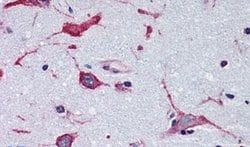
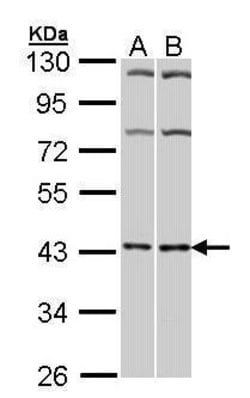
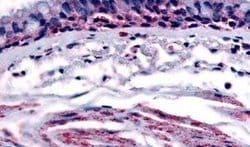
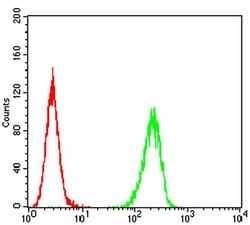
Immunohistochemistry (Paraffin)
Concentration
1 mg/mL
Formulation
PBS with 0.1% sodium azide
Gene Accession No.
P25099, P30542
Gene Symbols
ADORA1
Immunogen
Synthetic 20 amino acid peptide from C-terminus of human Adenosine A1 Receptor.
Quantity
50 μg
Primary or Secondary
Primary
Target Species
Human, Rat
Product Type
Antibody
Isotype
IgG
Related Products
Description
- Percent identity with other species by BLAST analysis: Human, Gibbon, Monkey (100%) Orangutan, Marmoset, Elephant, Horse (95%) Rat, Pig, Guinea pig (90%)
- Adenosine receptors (ARs) are members of the 7-transmembrane domain G-protein-coupled receptor superfamily
- Structural, biochemical and pharmacological analyses of the AR genes and protein has led to the discovery of four distinct AR subtypes (A1, A2a, A2b, A3)
- Activation of ARs mediates several receptor subtype-specific physiological processes that include cardiac rate, smooth muscle tone, platelet aggregation, inflammation, cell growth and death, and neurotransmission
- The A1AR is a glycoprotein that can activate Gi and Go proteins in vitro
- In intact cells, agonist occupation of the A1AR has been shown to cause pertussis toxin-sensitive inhibition of adenylyl cyclase activity and, in some systems, a stimulation of phospholipase C resulting in mobilization of intracellular calcium stores
- Activation of potassium channels by A1AR has been intensively studied in relation to its dramatic effects on the cardiovascular system
- A1AR protein is highly expressed in brain (especially cerebellum, hippocampus, thalamus, and cortex) and spinal cord and in part, modulates neurotransmitter release
- In white adipocytes A1AR inhibits lipolysis and stimulates glucose uptake
- Other tissues also express A1AR including kidney and testis.