PIPA533706
GPR39 Polyclonal Antibody, Invitrogen™
Manufacturer: Thermo Scientific
Select a Size
| Pack Size | SKU | Availability | Price |
|---|---|---|---|
| Each of 1 | PIPA533706-Each-of-1 | In Stock | ₹ 46,591.50 |
PIPA533706 - Each of 1
In Stock
Quantity
1
Base Price: ₹ 46,591.50
GST (18%): ₹ 8,386.47
Total Price: ₹ 54,977.97
Antigen
GPR39
Classification
Polyclonal
Conjugate
Unconjugated
Gene
GPR39
Gene Alias
4933415E13Rik; G protein-coupled receptor 39; GPR39; G-protein coupled receptor 39
Host Species
Rabbit
Purification Method
Antigen affinity chromatography
Regulatory Status
RUO
Gene ID (Entrez)
100054142, 103348824, 2863, 71111
Content And Storage
Store at 4°C short term. For long term storage, store at -20°C, avoiding freeze/thaw cycles.
Form
Liquid
Applications
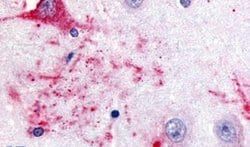
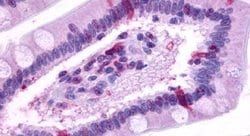
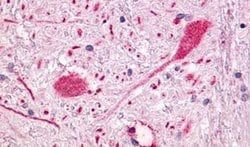
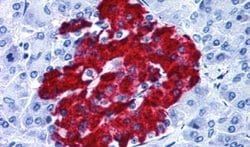
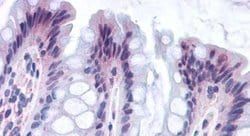
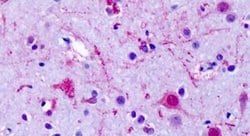
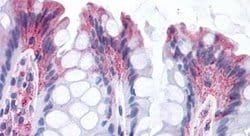
Immunohistochemistry (Paraffin)
Concentration
1 mg/mL
Formulation
PBS with 0.1% sodium azide
Gene Accession No.
O43194, Q5U431
Gene Symbols
GPR39
Immunogen
Synthetic 16 amino acid peptide from 3rd extracellular domain of human GPR39.
Quantity
50 μg
Primary or Secondary
Primary
Target Species
Equine, Human, Mouse, Rabbit
Product Type
Antibody
Isotype
IgG
Related Products

Description
- Percent identity with other species by BLAST analysis: Human, Gorilla, Gibbon, Mouse, Rat, Horse, Rabbit (100%) Marmoset, Bovine, Panda, Turkey, Chicken (94%)
- The G-protein-coupled receptor (GPCR) superfamily is comprised of an estimated 600-1,000 members and is the largest known class of molecular targets with proven therapeutic value
- G protein-coupled receptor 39 is an orphan receptor in the Ghrelin family pathway
- Various studies have shown that GPR39 plays important roles in hypertension, adipogenesis and that overexpression of GPR39 contributes to malignant development of human esophageal squamous cell carcinoma.