PIPA533928
MC5R Polyclonal Antibody, Invitrogen™
Manufacturer: Thermo Scientific
Select a Size
| Pack Size | SKU | Availability | Price |
|---|---|---|---|
| Each of 1 | PIPA533928-Each-of-1 | In Stock | ₹ 46,502.50 |
PIPA533928 - Each of 1
In Stock
Quantity
1
Base Price: ₹ 46,502.50
GST (18%): ₹ 8,370.45
Total Price: ₹ 54,872.95
Antigen
MC5R
Classification
Polyclonal
Conjugate
Unconjugated
Gene
MC5R
Gene Alias
H MC2; MC2; MC-2; MC5; MC5 receptor; MC5R; MC5-R; melanocortin 5 receptor; melanocortin receptor 5; melanocortin-5 receptor
Host Species
Rabbit
Purification Method
Antigen affinity chromatography
Regulatory Status
RUO
Gene ID (Entrez)
4161
Content And Storage
Store at 4°C short term. For long term storage, store at -20°C, avoiding freeze/thaw cycles.
Form
Liquid
Applications
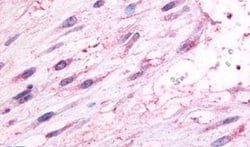
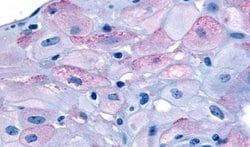
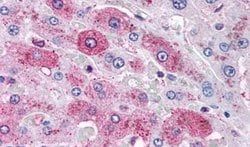
Immunohistochemistry (Paraffin)
Concentration
1 mg/mL
Formulation
PBS with 0.1% sodium azide
Gene Accession No.
P33032
Gene Symbols
MC5R
Immunogen
Synthetic 18 amino acid peptide from N-terminal extracellular domain of human MC5 Receptor.
Quantity
50 μg
Primary or Secondary
Primary
Target Species
Human
Product Type
Antibody
Isotype
IgG
Related Products
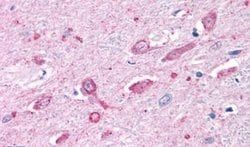
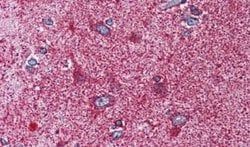
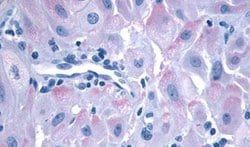
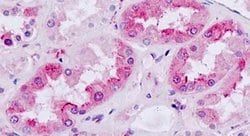

Description
- Percent identity with other species by BLAST analysis: Human, Chimpanzee, Gorilla (100%) Bat, Panda (94%) Monkey, Marmoset, Rabbit (89%)
- MC5R, a Melanocortin Receptor, mediates the effects of melanocyte-stimulating hormone (MSH) and adrenocorticotropic hormone (ACTH), and activates adenylate cyclase
- This receptor controls multiple functions in the brain and in peripheral tissues, such as thermoregulation, immunomodulation, appetite control, and sexual behavior
- Melanocortin 5 receptor has been reported to be expressed in a variety of tissues, especially in pituitary, exocrine glands, reproductive organs, lung, kidney, and esophagus
- No human ESTs have been isolated.