MCHR1 Polyclonal Antibody, Invitrogen™
Manufacturer: Thermo Scientific
Select a Size
| Pack Size | SKU | Availability | Price |
|---|---|---|---|
| Each of 1 | PIPA533931-Each-of-1 | In Stock | ₹ 46,502.50 |
PIPA533931 - Each of 1
In Stock
Quantity
1
Base Price: ₹ 46,502.50
GST (18%): ₹ 8,370.45
Total Price: ₹ 54,872.95
Antigen
MCHR1
Classification
Polyclonal
Conjugate
Unconjugated
Gene
Mchr1
Gene Alias
AW049955; G protein coupled receptor 24; G protein-coupled receptor 24; GPCR24; GPR24; Gpr24-9 protein coupled receptor; G-protein coupled receptor 24; MCH 1 receptor; MCH receptor 1; MCH1; Mch1r; MCH-1R; MCHR; MCHR1; MCH-R1; MCHR-1; melanin concentrating hormone receptor 1; melanin-concentrating hormone receptor 1; SLC1; SLC-1; Somatostatin receptor-like protein
Host Species
Rabbit
Purification Method
Antigen affinity chromatography
Regulatory Status
RUO
Gene ID (Entrez)
2847
Content And Storage
Store at 4°C short term. For long term storage, store at -20°C, avoiding freeze/thaw cycles.
Form
Liquid
Applications
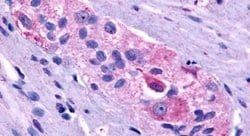
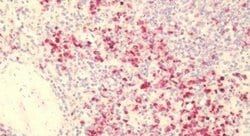
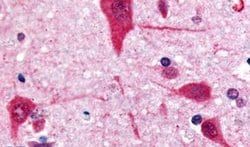
Immunohistochemistry (Paraffin)
Concentration
1 mg/mL
Formulation
PBS with 0.1% sodium azide
Gene Accession No.
Q99705
Gene Symbols
Mchr1
Immunogen
Synthetic 20 amino acid peptide from N-terminal extracellular domain of human MCHR1.
Quantity
50 μg
Primary or Secondary
Primary
Target Species
Human, Non-human Primate
Product Type
Antibody
Isotype
IgG
Related Products

Description
- Percent identity with other species by BLAST analysis: Human, Chimpanzee, Gibbon, Monkey (100%) Mouse (85%)
- MCHR1 is a member of the G protein-coupled receptor family 1
- It is an integral plasma membrane protein which binds melanin-concentrating hormone
- The encoded protein can inhibit cAMP accumulation and stimulate intracellular calcium flux, and is probably involved in the neuronal regulation of food consumption
- Although structurally similar to somatostatin receptors, this protein does not seem to bind somatostatin.