PIPA534046
OR10R2 Polyclonal Antibody, Invitrogen™
Manufacturer: Thermo Scientific
Select a Size
| Pack Size | SKU | Availability | Price |
|---|---|---|---|
| Each of 1 | PIPA534046-Each-of-1 | In Stock | ₹ 46,502.50 |
PIPA534046 - Each of 1
In Stock
Quantity
1
Base Price: ₹ 46,502.50
GST (18%): ₹ 8,370.45
Total Price: ₹ 54,872.95
Antigen
OR10R2
Classification
Polyclonal
Conjugate
Unconjugated
Gene
OR10R2
Gene Alias
Olfactory receptor 10R2; olfactory receptor family 10 subfamily R member 2; olfactory receptor OR1-8; olfactory receptor, family 10, subfamily R, member 2; OR10R2; OR10R2Q; OR1-8
Host Species
Rabbit
Purification Method
Antigen affinity chromatography
Regulatory Status
RUO
Gene ID (Entrez)
343406, 781998
Content And Storage
Store at 4°C short term. For long term storage, store at -20°C, avoiding freeze/thaw cycles.
Form
Liquid
Applications
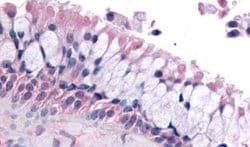
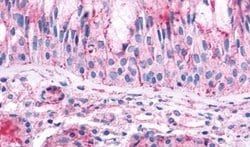
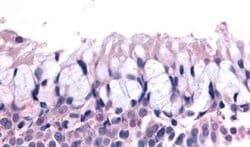
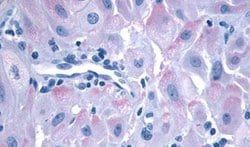
Immunohistochemistry (Paraffin)
Concentration
1 mg/mL
Formulation
PBS with 0.1% sodium azide
Gene Accession No.
Q8NGX6
Gene Symbols
OR10R2
Immunogen
Synthetic 14 amino acid peptide from 2nd extracellular domain of human OR10R2.
Quantity
50 μg
Primary or Secondary
Primary
Target Species
Bovine, Human, Rabbit
Product Type
Antibody
Isotype
IgG
Related Products
Description
- Percent identity with other species by BLAST analysis: Human, Gorilla, Gibbon, Monkey, Marmoset, Bovine, Rabbit (100%) Elephant, Horse (93%) Pig, Opossum (86%)
- G-protein Coupled Receptors (GPCRs) comprise one of the largest families of signaling molecules with more thana thousandmembers currently predicted to exist.All GPCRs share a structural motif consisting of seven membrane-spanning helices, and exist in both active and inactive forms
- An array of activating ligands participate in the conformation of GPCRs which leads to signaling via G-proteins and downstream effectors
- Ongoing studies have also shown the vast series of reactions which participate in the negative regulation of GPCRs
- This "eturn-off"e activity has tremendous implications for the physiological action of the cell, and continues to drive pharmacological research for new drug candidates.