PIPA554231
Ubiquilin 3 Polyclonal Antibody, Invitrogen™
Manufacturer: Thermo Scientific
Select a Size
| Pack Size | SKU | Availability | Price |
|---|---|---|---|
| Each of 1 | PIPA554231-Each-of-1 | In Stock | ₹ 52,332.00 |
PIPA554231 - Each of 1
In Stock
Quantity
1
Base Price: ₹ 52,332.00
GST (18%): ₹ 9,419.76
Total Price: ₹ 61,751.76
Antigen
Ubiquilin 3
Classification
Polyclonal
Conjugate
Unconjugated
Gene
UBQLN3
Gene Alias
4933400K24Rik; testicular tissue protein Li 220; TUP-1; ubiquilin 3; ubiquilin-3; Ubqln3
Host Species
Rabbit
Purification Method
Antigen affinity chromatography
Regulatory Status
RUO
Gene ID (Entrez)
50613
Content And Storage
Store at 4°C short term. For long term storage, store at -20°C, avoiding freeze/thaw cycles.
Form
Liquid
Applications
Immunohistochemistry
Concentration
0.9 mg/mL
Formulation
PBS with 40% glycerol and 0.02% sodium azide; pH 7.2
Gene Accession No.
Q9H347
Gene Symbols
UBQLN3
Immunogen
Recombinant protein corresponding to Human Ubiquilin 3
Quantity
100 μL
Primary or Secondary
Primary
Target Species
Human
Product Type
Antibody
Isotype
IgG
Related Products

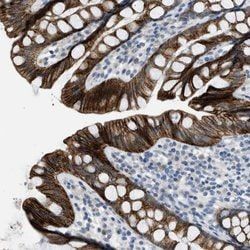

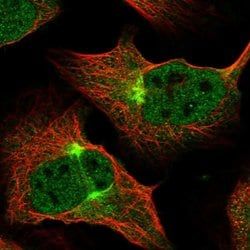

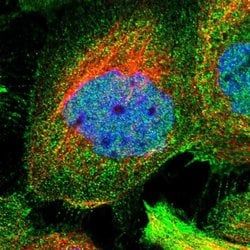


Description
- Immunogen sequence: ATEAPRLLLW FMPCLAGTGS VAGGIESRED PLMSEDPLPN PPPEVFPALD SAELGFLSPP FLHMLQDLVS TNPQQLQPEA HFQVQLEQL Highest antigen sequence identity to the following orthologs: Mouse - 67%, Rat - 70%
- This gene encodes an ubiquitin-like protein (ubiquilin) that shares high degree of similarity with related products in yeast, rat and frog
- Ubiquilins contain a N-terminal ubiquitin-like domain and a C-terminal ubiquitin-associated domain
- They physically associate with both proteasomes and ubiquitin ligases, and thus thought to functionally link the ubiquitination machinery to the proteasome to affect in vivo protein degradation
- This gene is specifically expressed in the testis, and proposed to regulate cell-cycle progression during spermatogenesis.