PIPA556679
BYSL Polyclonal Antibody, Invitrogen™
Manufacturer: Thermo Scientific
Select a Size
| Pack Size | SKU | Availability | Price |
|---|---|---|---|
| Each of 1 | PIPA556679-Each-of-1 | In Stock | ₹ 49,439.50 |
PIPA556679 - Each of 1
In Stock
Quantity
1
Base Price: ₹ 49,439.50
GST (18%): ₹ 8,899.11
Total Price: ₹ 58,338.61
Antigen
BYSL
Classification
Polyclonal
Conjugate
Unconjugated
Gene
BYSL
Gene Alias
by the ribosomal protein s6 gene, drosophila, homolog-like; Bys; BYSL; bysl {ECO:0000312; Bystin; bystin like; bystin-like; EMBL:AAH79030.1, ECO:0000312; Enp1; RGD:727959}
Host Species
Rabbit
Purification Method
Antigen affinity chromatography
Regulatory Status
RUO
Gene ID (Entrez)
53414, 705
Content And Storage
Store at 4°C short term. For long term storage, store at -20°C, avoiding freeze/thaw cycles.
Form
Liquid
Applications
Immunocytochemistry, Immunohistochemistry, Western Blot
Concentration
0.2 mg/mL
Formulation
PBS with 40% glycerol and 0.02% sodium azide; pH 7.2
Gene Accession No.
O54825, Q13895
Gene Symbols
BYSL
Immunogen
Recombinant protein corresponding to Human BYSL
Quantity
100 μL
Primary or Secondary
Primary
Target Species
Human, Mouse
Product Type
Antibody
Isotype
IgG
Related Products


Description
- Immunogen sequence: LDALVFHFLG FRTEKRELPV LWHQCLLTLV QRYKADLATD QKEALLELLR LQPHPQLSPE IRRELQSAVP RDVEDVPITV E Highest antigen sequence identity to the following orthologs: Mouse - 90%, Rat - 91%
- Bystin is expressed as a 2-kb major transcript and a 3.6-kb minor transcript in SNG-M cells and in human trophoblastic teratocarcinoma HT-H cells
- Protein binding assays determined that bystin binds directly to trophinin and tastin, and that binding is enhanced when cytokeratins 8 and 18 are present
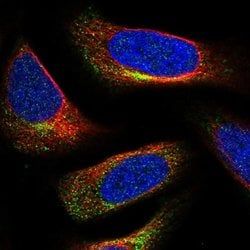
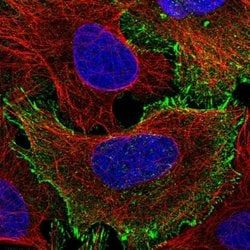
- Immunocytochemistry of HT-H cells showed that bystin colocalizes with trophinin, tastin, and the cytokeratins, suggesting that these molecules form a complex in trophectoderm cells at the time of implantation
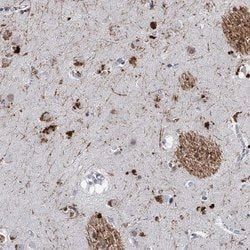
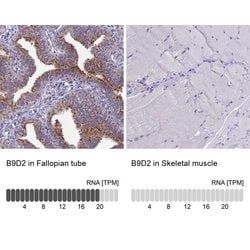
- Using immunohistochemistry it was determined that trophinin and bystin are found in the placenta from the sixth week of pregnancy
- Both proteins were localized in the cytoplasm of the syncytiotrophoblast in the chorionic villi and in endometrial decidual cells at the uteroplacental interface
- After week 10, the levels of trophinin, tastin, and bystin decreased and then disappeared from placental villi.