TBCA Polyclonal Antibody, Invitrogen™
Manufacturer: Thermo Scientific
Select a Size
| Pack Size | SKU | Availability | Price |
|---|---|---|---|
| Each of 1 | PIPA557683-Each-of-1 | In Stock | ₹ 48,905.50 |
PIPA557683 - Each of 1
In Stock
Quantity
1
Base Price: ₹ 48,905.50
GST (18%): ₹ 8,802.99
Total Price: ₹ 57,708.49
Antigen
TBCA
Classification
Polyclonal
Conjugate
Unconjugated
Gene
TBCA
Gene Alias
CFA; chaperonin cofactor A; co-chaperonin associated with a- & b-tubulin; cofactor A; Tbca; Tbca13; TCP1-chaperonin cofactor A; tubulin cofactor a; tubulin folding cofactor A; tubulin-folding cofactor A; Tubulin-specific chaperone A
Host Species
Rabbit
Purification Method
Antigen affinity chromatography
Regulatory Status
RUO
Gene ID (Entrez)
6902
Content And Storage
Store at 4°C short term. For long term storage, store at -20°C, avoiding freeze/thaw cycles.
Form
Liquid
Applications
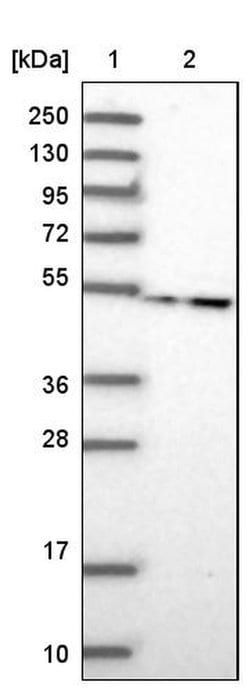
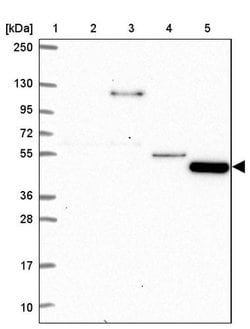
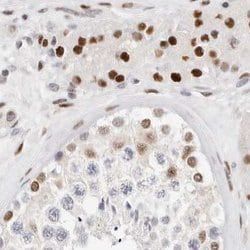
Immunocytochemistry, Immunohistochemistry, Western Blot
Concentration
0.5 mg/mL
Formulation
PBS with 40% glycerol and 0.02% sodium azide; pH 7.2
Gene Accession No.
O75347
Gene Symbols
TBCA
Immunogen
Recombinant protein corresponding to Human TBCA
Quantity
100 μL
Primary or Secondary
Primary
Target Species
Human
Product Type
Antibody
Isotype
IgG
Related Products



Description
- Immunogen sequence: MRAEDGENYD IKKQAEILQE SRMMIPDCQR RLEAAYLDLQ RILENEKDLE EAEEY Highest antigen sequence identity to the following orthologs: Mouse - 91%, Rat - 89%
- The product of this gene is one of four proteins (cofactors A, D, E, and C) involved in the pathway leading to correctly folded beta-tubulin from folding intermediates
- Cofactors A and D are believed to play a role in capturing and stabilizing beta-tubulin intermediates in a quasi-native confirmation
- Cofactor E binds to the cofactor D/beta-tubulin complex; interaction with cofactor C then causes the release of beta-tubulin polypeptides that are committed to the native state.