C10orf99 Polyclonal Antibody, Invitrogen™
Manufacturer: Thermo Scientific
Select a Size
| Pack Size | SKU | Availability | Price |
|---|---|---|---|
| Each of 1 | PIPA562266-Each-of-1 | In Stock | ₹ 52,688.00 |
PIPA562266 - Each of 1
In Stock
Quantity
1
Base Price: ₹ 52,688.00
GST (18%): ₹ 9,483.84
Total Price: ₹ 62,171.84
Antigen
C10orf99
Classification
Polyclonal
Conjugate
Unconjugated
Gene
C10orf99
Gene Alias
Antimicrobial peptide with 57 amino acid residues; anti-microbial peptide with 57 amino acid residues; antimicrobial peptide-57; AP-57; C10orf99; chromosome 10 open reading frame 99; colon-derived SUSD2 binding factor; CSBF; GPR15L; Protein GPR15L; RLLV1833; secreted protein C10orf99; UNQ1833; UNQ1833/PRO3446
Host Species
Rabbit
Purification Method
Antigen affinity chromatography
Regulatory Status
RUO
Gene ID (Entrez)
387695
Content And Storage
Store at 4°C short term. For long term storage, store at -20°C, avoiding freeze/thaw cycles.
Form
Liquid
Applications
Immunohistochemistry
Concentration
0.15 mg/mL
Formulation
PBS with 40% glycerol and 0.02% sodium azide; pH 7.2
Gene Accession No.
Q6UWK7
Gene Symbols
C10orf99
Immunogen
Recombinant protein corresponding to Human C10orf99
Quantity
100 μL
Primary or Secondary
Primary
Target Species
Human
Product Type
Antibody
Isotype
IgG
Related Products



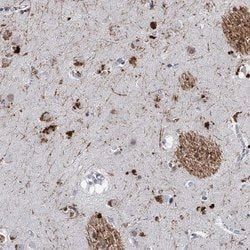

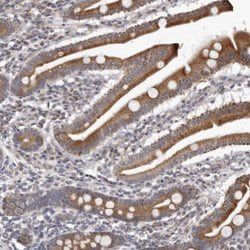
Description
- Immunogen sequence: KRRPAKAWSG RRTRLCCHRV PSPNSTNLKG HHVRLCKPCK LEPEPRLWVV PGALPQV Highest antigen sequence identity to the following orthologs: Mouse - 46%, Rat - 46%
- GPR15L is a newly identified ligand for GPR15, a member of the G protein-coupled receptor (GPCR) family
- Upon ligation, GPR15L acts as a potent chemoattractant for GPR15-expressing T cells and together they mediate lymphocyte recruitment to the large intestine and skin
- GPR15L is constitutively expressed by colon epithelial cells where its expression is minimally altered by intestinal inflammation
- Conversely, GPR15L is nearly undetectable in adult epidermis but highly upregulated during wound healing and inflammation, particularly in psoriasis
- Significant expression of GPR15L is also seen in additional mucosal epithelial cells, including those of the stomach, esophagus, and urinary tract
- While maintaining similar expression patterns and intramolecular disulfide cysteine bridges found in members of the CC chemokine family, GPR15L differs from classic CC and CXC chemokines, whose active sites are found on the N-terminus, in that it relies on its C-terminus for receptor interaction
- GPR15L was first identified as an antimicrobial peptide (AMP) due to its broad spectrum of antimicrobial activity, a property shared with many chemokines
- GPR15L binds to an additional receptor, SUSD2, and early studies have indicated that both are downregulated in colon cancer tissue resulting in inhibited colon cancer growth.