ACSBG2 Polyclonal Antibody, Invitrogen™
Manufacturer: Thermo Scientific
Select a Size
| Pack Size | SKU | Availability | Price |
|---|---|---|---|
| Each of 1 | PIPA562292-Each-of-1 | In Stock | ₹ 52,332.00 |
PIPA562292 - Each of 1
In Stock
Quantity
1
Base Price: ₹ 52,332.00
GST (18%): ₹ 9,419.76
Total Price: ₹ 61,751.76
Antigen
ACSBG2
Classification
Polyclonal
Conjugate
Unconjugated
Gene
ACSBG2
Gene Alias
ACSBG2; Acyl-CoA synthetase bubblegum family member 2; Arachidonate--CoA ligase ACSBG2; BGR; BRGL; bubblegum-related protein; Long-chain-fatty-acid--CoA ligase ACSBG2; PRTDNY3; PRTD-NY3; testicular tissue protein Li 8; UNQ2443/PRO5005
Host Species
Rabbit
Purification Method
Antigen affinity chromatography
Regulatory Status
RUO
Gene ID (Entrez)
81616
Content And Storage
Store at 4°C short term. For long term storage, store at -20°C, avoiding freeze/thaw cycles.
Form
Liquid
Applications
Immunohistochemistry
Concentration
0.05 mg/mL
Formulation
PBS with 40% glycerol and 0.02% sodium azide; pH 7.2
Gene Accession No.
Q5FVE4
Gene Symbols
ACSBG2
Immunogen
Recombinant protein corresponding to Human ACSBG2
Quantity
100 μL
Primary or Secondary
Primary
Target Species
Human
Product Type
Antibody
Isotype
IgG
Related Products


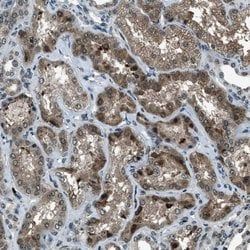
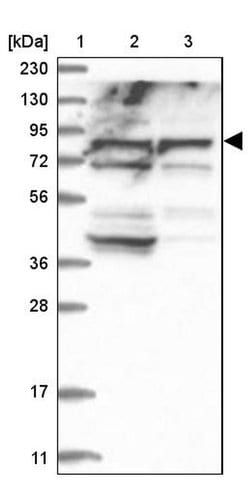

Description
- Immunogen sequence: IYATNSAEAC QYVITHAKVN ILLVENDQQL QKILSIPQSS LEPLKAIIQY RLPMKKNNNL YSWDDFMELG RSIPDTQLEQ VIESQKANQC AVL Highest antigen sequence identity to the following orthologs: Mouse - 70%, Rat - 72%
- Catalyzes the conversion of fatty acids such as long chain and very long-chain fatty acids to their active form acyl-CoAs for both synthesis of cellular lipids, and degradation via beta-oxidation
- Can activate diverse saturated, monosaturated and polyunsaturated fatty acids (PubMed:16371355, PubMed:16762313)
- Has increased ability to activate oleic and linoleic acid (PubMed:16371355)
- May play a role in spermatogenesis (PubMed:15685348)
- [UniProt]