ZFYVE26 Polyclonal Antibody, Invitrogen™
Manufacturer: Thermo Scientific
Select a Size
| Pack Size | SKU | Availability | Price |
|---|---|---|---|
| Each of 1 | PIPA563138-Each-of-1 | In Stock | ₹ 48,905.50 |
PIPA563138 - Each of 1
In Stock
Quantity
1
Base Price: ₹ 48,905.50
GST (18%): ₹ 8,802.99
Total Price: ₹ 57,708.49
Antigen
ZFYVE26
Classification
Polyclonal
Conjugate
Unconjugated
Gene
ZFYVE26
Gene Alias
4930465A13; 9330197E15Rik; A630028O16Rik; FYVE domain-containing centrosomal protein; FYVE-CENT; Gm893; Kiaa0321; mKIAA0321; Spastizin; SPG15; Zfyve26; Zinc finger FYVE domain-containing protein 26; zinc finger FYVE-type containing 26; zinc finger, FYVE domain containing 26
Host Species
Rabbit
Purification Method
Antigen affinity chromatography
Regulatory Status
RUO
Gene ID (Entrez)
23503
Content And Storage
Store at 4°C short term. For long term storage, store at -20°C, avoiding freeze/thaw cycles.
Form
Liquid
Applications
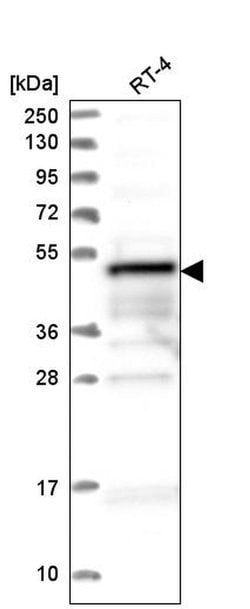
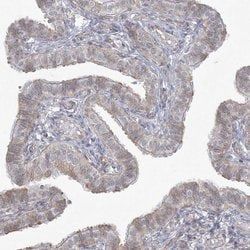
Immunohistochemistry
Concentration
0.05 mg/mL
Formulation
PBS with 40% glycerol and 0.02% sodium azide; pH 7.2
Gene Accession No.
Q68DK2
Gene Symbols
ZFYVE26
Immunogen
Recombinant protein corresponding to Human ZFYVE26
Quantity
100 μL
Primary or Secondary
Primary
Target Species
Human
Product Type
Antibody
Isotype
IgG
Related Products

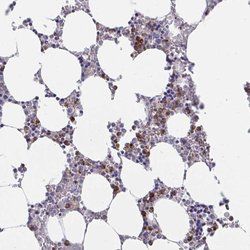
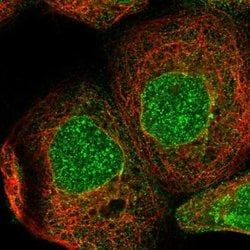
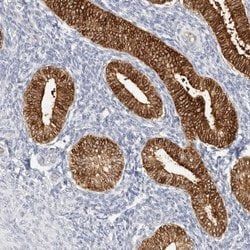
Description
- Immunogen sequence: DSSKNESPPY SFVVRVPKAD EVEWILDLKE EENELVRSEF YYEQAPSASL CIAILNLHRD SIACGHQLIE HCCRLSKGLT NPEVDAGLL Highest antigen sequence identity to the following orthologs: Mouse - 93%, Rat - 91%
- Hereditary spastic paraplegias (HSPs) are genetically and phenotypically heterogeneous disorders
- Spastic paraplegia with thinning of the corpus callosum (ARHSP-TCC) is a relatively frequent form of complicated hereditary spastic paraplegia in which mental retardation and muscle stiffness at onset are followed by slowly progressive paraparesis and cognitive deterioration
- SPG15 is the second gene known to be responsible for ARHSP-TCC in the Italian population
- Mutations in this gene are associated with autosomal recessive spastic paraplegia-15
- SPG15 encodes a protein containing a FYVE zinc finger binding domain which is thought to target these proteins to membrane lipids through interaction with phospholipids in the membrane
- SPG15 mRNA is widely distributed in human tissues, as well as in rat embryos, suggesting a possible role for this protein during embryonic development
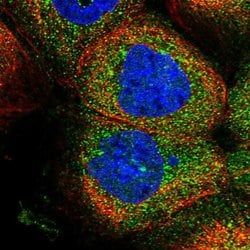
- SPG15 co-localizes partially with endoplasmic reticulum and endosome markers, suggesting a role in intracellular trafficking
- Multiple isoforms of SPG15 are known to exist.