PIPA567686
MAGEH1 Polyclonal Antibody, Invitrogen™
Manufacturer: Thermo Scientific
Select a Size
| Pack Size | SKU | Availability | Price |
|---|---|---|---|
| Each of 1 | PIPA567686-Each-of-1 | In Stock | ₹ 46,502.50 |
PIPA567686 - Each of 1
In Stock
Quantity
1
Base Price: ₹ 46,502.50
GST (18%): ₹ 8,370.45
Total Price: ₹ 54,872.95
Antigen
MAGEH1
Classification
Polyclonal
Conjugate
Unconjugated
Gene
MAGEH1
Gene Alias
1-Apr; 2010107K23Rik; Apoptosis-related protein 1; APR1; APR-1; MAGE family member H1; MAGEH; Mageh1; MAGE-H1 antigen; melanoma antigen family H, 1; melanoma antigen family H1; melanoma antigen, family H, 1; melanoma-associated antigen H1; Restin
Host Species
Rabbit
Purification Method
affinity chromatography
Regulatory Status
RUO
Gene ID (Entrez)
28986, 367767, 75625
Content And Storage
-20°C
Form
Liquid
Applications
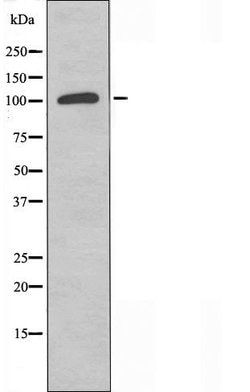
Western Blot
Concentration
1 mg/mL
Formulation
PBS with 50% glycerol and 0.02% sodium azide; pH 7.4
Gene Accession No.
Q5PPP4, Q9H213, Q9NWG9
Gene Symbols
MAGEH1
Immunogen
Synthesized peptide derived from human MAGEH1.
Quantity
100 μL
Primary or Secondary
Primary
Target Species
Human, Mouse, Rat
Product Type
Antibody
Isotype
IgG
Related Products


Description
- Predicted to react with Mouse and Rat samples
- Melanoma-associated antigen (MAGE) are completely silent in normal tissues, with the exception of male germ cells, and, for some of them, placenta
- These antigens ought to be strictly tumor specific, expressed in tumor cells of various histological types
- Because of their specific expression on tumor cells, these antigens are of particular interest for antitumor immunotherapy
- Genes of the MAGE family direct the expression of tumor antigens that are recognized on a human melanoma by autologous cytolytic T lymphocytes
- Though the function of MAGEH1 is not fully elucidated, it may play a role in embryonal development and tumor transformation or aspects of tumor progression.