GPR37 Polyclonal Antibody, Invitrogen™
Manufacturer: Thermo Scientific
Select a Size
| Pack Size | SKU | Availability | Price |
|---|---|---|---|
| Each of 1 | PIPA567865-Each-of-1 | In Stock | ₹ 46,502.50 |
PIPA567865 - Each of 1
In Stock
Quantity
1
Base Price: ₹ 46,502.50
GST (18%): ₹ 8,370.45
Total Price: ₹ 54,872.95
Antigen
GPR37
Classification
Polyclonal
Conjugate
Unconjugated
Gene
GPR37
Gene Alias
AI848630; EDNRBL; endothelin B receptor-like protein 1; ETBR-LP-1; G protein-coupled receptor 37; G protein-coupled receptor 37 (endothelin receptor type B-like); Gpcr/cns1; Gpr37; G-protein coupled receptor 37; G-protein coupled receptor CNS1; hET(B)R-LP; Het-b-r-lp; Pael receptor; PAELR; Pael-R; parkin-associated endothelin B-like receptor; Parkin-associated endothelin receptor-like receptor; probable G-protein coupled receptor 37; prosaposin receptor GPR37
Host Species
Rabbit
Purification Method
affinity chromatography
Regulatory Status
RUO
Gene ID (Entrez)
117549, 14763, 2861
Content And Storage
-20°C
Form
Liquid
Applications
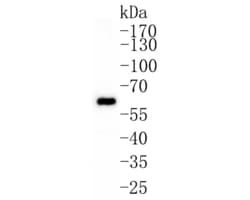
Western Blot
Concentration
1 mg/mL
Formulation
PBS with 50% glycerol and 0.02% sodium azide; pH 7.4
Gene Accession No.
O15354, Q9QY42, Q9QYC6
Gene Symbols
GPR37
Immunogen
Synthesized peptide derived from human GPR37.
Quantity
100 μL
Primary or Secondary
Primary
Target Species
Human, Mouse, Rat
Product Type
Antibody
Isotype
IgG
Related Products

Description
- Predicted to react with Mouse and Rat samples
- Parkinson is the second most common neurodegenerative disease after Alzheimers
- About 1 percent of people over the age of 65 and 3 percent of people over the age of 75 are affected by the disease
- The mutation is the most common cause of Parkinson disease identified to date
- The function of Park2 is not well-known; however, it may play a role in the ubiquitin-mediated proteolytic pathway
- Mutations in this gene are known to cause autosomal recessive juvenile parkinsonism
- Alternative splicing of this gene produces three known products of undetermined function
- Panneuronal expression of Parkin substrate Pael-R causes age-dependent selective degeneration of Drosophila dopaminergic (DA) neurons; coexpression of Parkin degrades Pael-R and suppresses its toxicity.