SEMA3A Polyclonal Antibody, Invitrogen™
Manufacturer: Thermo Scientific
Select a Size
| Pack Size | SKU | Availability | Price |
|---|---|---|---|
| Each of 1 | PIPA567972-Each-of-1 | In Stock | ₹ 52,510.00 |
PIPA567972 - Each of 1
In Stock
Quantity
1
Base Price: ₹ 52,510.00
GST (18%): ₹ 9,451.80
Total Price: ₹ 61,961.80
Antigen
SEMA3A
Classification
Polyclonal
Conjugate
Unconjugated
Gene
SEMA3A
Gene Alias
COLL1; coll-1; collapsin 1; collapsin-1; HH16; Hsema-I; Hsema-III; MGC133243; sema D; sema domain, immunoglobulin domain (Ig), short basic domain, sec; sema domain, immunoglobulin domain (Ig), short basic domain, secreted, (semaphorin) 3A; sema III; SEMA1; SEMA3A; Semad; SEMAIII; SEMAL; Semaphorin 3a; semaphorin D; semaphorin III; semaphorin L; semaphorin-3A; Semaphorin-D; SemD
Host Species
Rabbit
Purification Method
affinity chromatography
Regulatory Status
RUO
Gene ID (Entrez)
10371, 20346, 29751
Content And Storage
-20°C
Form
Liquid
Applications
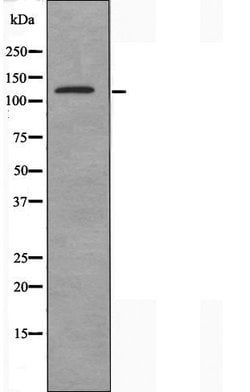
Western Blot
Concentration
1 mg/mL
Formulation
PBS with 50% glycerol and 0.02% sodium azide; pH 7.4
Gene Accession No.
O08665, Q14563, Q63548
Gene Symbols
SEMA3A
Immunogen
Synthesized peptide derived from human SEMA3A.
Quantity
100 μL
Primary or Secondary
Primary
Target Species
Human, Mouse, Rat
Product Type
Antibody
Isotype
IgG
Related Products
Description
- Predicted to react with Mouse and Rat samples
- This gene is a member of the semaphorin family and encodes a protein with an Ig-like C2-type domain, a PSI domain and a Sema domain
- This secreted protein can function as either a chemorepulsive agent, inhibiting axonal outgrowth, or as a chemoattractive agent, stimulating the growth of apical dendrites
- In both cases, the protein is vital for normal neuronal pattern development
- Increased expression of this protein is associated with schizophrenia and is seen in a variety of human tumor cell lines
- Also, aberrant release of this protein is associated with the progression of Alzheimer's disease.