PIPA567990
Epstein Barr Virus BGLF4 Polyclonal Antibody, Invitrogen™
Manufacturer: Thermo Scientific
Select a Size
| Pack Size | SKU | Availability | Price |
|---|---|---|---|
| Each of 1 | PIPA567990-Each-of-1 | In Stock | ₹ 46,057.50 |
PIPA567990 - Each of 1
In Stock
Quantity
1
Base Price: ₹ 46,057.50
GST (18%): ₹ 8,290.35
Total Price: ₹ 54,347.85
Antigen
Epstein Barr Virus BGLF4
Classification
Polyclonal
Conjugate
Unconjugated
Gene Alias
EBV
Immunogen
Synthesized peptide derived from human KR2_EBV.
Quantity
100 μL
Primary or Secondary
Primary
Content And Storage
-20°C
Form
Liquid
Applications
Western Blot
Concentration
1 mg/mL
Formulation
PBS with 50% glycerol and 0.02% sodium azide; pH 7.4
Host Species
Rabbit
Purification Method
affinity chromatography
Regulatory Status
RUO
Target Species
Human
Product Type
Antibody
Isotype
IgG
Related Products


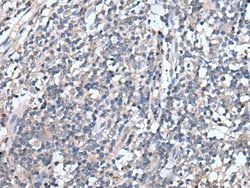
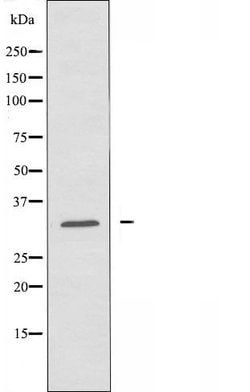
Description
- Predicted to react with Human samples
- BGLF4 plays many key roles by phosphorylating several proteins including the viral DNA processivity factor BMRF1, EBNA1 or EBNA2
- It modifies the host nuclear envelope structure and induces the redistribution of nuclear envelope-associated proteins by phosphorylating host nucleoporins
- Subsequently, promotes the nuclear transport of EBV lytic proteins
- Required for efficient lytic DNA replication and release of nucleocapsids from the nucleus
- Contributes to the compaction of host cell chromatin in cells undergoing lytic replication, presumably by phosphorylating the host condensin complex and host TOP2A
- Induces disassembly of the nuclear lamina by phosphorylating with host LMNA
- Phosphorylates substrates involved in capsid assembly and DNA packaging
- Facilitates the switch from latent to lytic DNA replication by down-regulating EBNA1 replication function
- Phosphorylates the viral immediate-early protein BZLF1 and inhibits its sumoylation by interacting with host SUMO1 and SUMO2.