SAP102 Polyclonal Antibody, Invitrogen™
Manufacturer: Thermo Scientific
Select a Size
| Pack Size | SKU | Availability | Price |
|---|---|---|---|
| Each of 1 | PIPA568165-Each-of-1 | In Stock | ₹ 46,502.50 |
PIPA568165 - Each of 1
In Stock
Quantity
1
Base Price: ₹ 46,502.50
GST (18%): ₹ 8,370.45
Total Price: ₹ 54,872.95
Antigen
SAP102
Classification
Polyclonal
Conjugate
Unconjugated
Gene
DLG3
Gene Alias
discs large homolog 3; discs large MAGUK scaffold protein 3; discs, large homolog 3; discs, large homolog 3 (Drosophila); disks large homolog 3; DLG3; Dlgh3; KIAA1232; mKIAA1232; MRX; MRX90; NEDLG; Neuroendocrine-DLG; PPP1R82; protein phosphatase 1, regulatory subunit 82; PSD-95/SAP90-related protein 1; SAP102; SAP-102; synapse-associated protein 102; XLMR
Host Species
Rabbit
Purification Method
affinity chromatography
Regulatory Status
RUO
Gene ID (Entrez)
1741, 53310, 58948
Content And Storage
-20°C
Form
Liquid
Applications
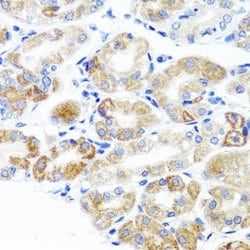
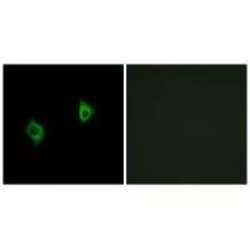
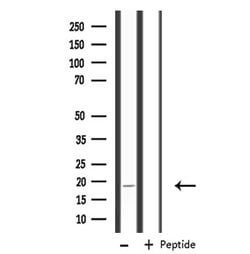
Immunocytochemistry, Western Blot
Concentration
1 mg/mL
Formulation
PBS with 50% glycerol and 0.02% sodium azide; pH 7.4
Gene Accession No.
P70175, Q62936, Q92796
Gene Symbols
DLG3
Immunogen
Synthesized peptide derived from human SAP102.
Quantity
100 μL
Primary or Secondary
Primary
Target Species
Human, Mouse, Rat
Product Type
Antibody
Isotype
IgG
Related Products

Description
- Predicted to react with Mouse and Rat samples
- Synapse-Associated Protein 102 (SAP102) is one of a family of plasma membrane-associated proteins found in synaptic junctions
- Like other members of the family, SAP102 has three approximately 90 amino acid repeats called PDZ domains followed by an SH3 domain and a yeast guanylate kinase homology (GuK) domain
- It is hypothesized that PDZ-domain interactions play a role in receptor and channel clustering which contributes to neuronal plasticity
- SAP102 is believed to participate in the clustering of certain proteins, including NMDA receptors, shaker-type potassium channels at the synaptic membrane in CNS neurons
- NMDA receptors and Shaker-type potassium channels both share C-terminal sequence homology consisting of a threonine/serine-X-valine-COOH (T/SXV) motif
- Other neuronal proteins that share this motif (beta 1 adrenergic receptor, some serotonin receptors, some sodium channel subunits, and additional potassium channel subunits) may interact with SAP102 by binding to its PDZ domains
- Neuronal nitric oxide synthase (nNOS), which lacks the T/SXV motif but which has its own PDZ domain, has been shown to associate with SAP102 in vitro through a pseudo-homotypic PDZ-PDZ interaction.