NAPE PLD Polyclonal Antibody, Invitrogen™
Manufacturer: Thermo Scientific
Select a Size
| Pack Size | SKU | Availability | Price |
|---|---|---|---|
| Each of 1 | PIPA572923-Each-of-1 | In Stock | ₹ 46,057.50 |
PIPA572923 - Each of 1
In Stock
Quantity
1
Base Price: ₹ 46,057.50
GST (18%): ₹ 8,290.35
Total Price: ₹ 54,347.85
Antigen
NAPE PLD
Classification
Polyclonal
Conjugate
Unconjugated
Gene
NAPEPLD
Gene Alias
A530089G06; C7orf18; DKFZp781D1098; FMP30; Mbldc1; Metallo-beta-lactamase domain containing 1; N-acyl phosphatidylethanolamine phospholipase D; N-acyl-phosphatidylethanolamine-hydrolyzing phospholipase D; NAPE-hydrolyzing phospholipase D; NAPEPLD; NAPE-PLD
Host Species
Rabbit
Quantity
100 μL
Primary or Secondary
Primary
Target Species
Fungi, Human, Mouse, Rat
Product Type
Antibody
Isotype
IgG
Applications
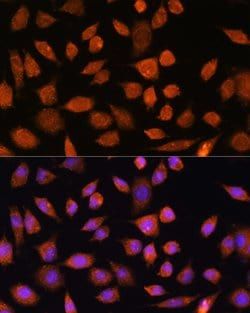
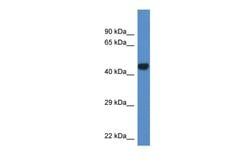
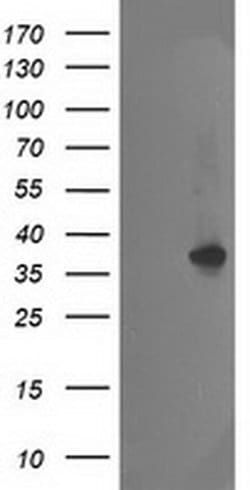
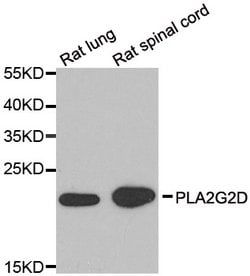
Immunocytochemistry, Western Blot
Concentration
Conc. Not Determined
Formulation
whole serum with 0.1% sodium azide
Gene Accession No.
Q6IQ20, Q769K2, Q8BH82
Gene Symbols
NAPEPLD
Immunogen
Synthetic peptide made to an internal portion of mouse NAPE-PLD (within residues 1-100). [Swiss-Prot# Q8BH82]
Regulatory Status
RUO
Gene ID (Entrez)
222236, 242864, 296757
Content And Storage
-20° C, Avoid Freeze/Thaw Cycles
Form
Liquid
Related Products


Description
- N-Acylphosphatidylethanolamine (NAPE)-hydrolyzing phospholipase D (NAPE-PLD) is a membrane-bound enzyme which releases the endocannabinoid anandamide and other bioactive N-acylethanolamines from their corresponding NAPEs in animal tissues
- NAPE-PLD has been shown to be expressed by specific populations of neurons in the brain and targeted to axonal processes
- Recent studies have suggested that NAEs generated by NAPE-PLD in axons may act as anterograde synaptic signaling molecules that regulate the activity of postsynaptic neurons
- NAPE-PLD has also been shown to catalyze the hydrolysis of NAPE to generate OEA (oleoylethanolamide), a natural lipid amide that inhibits food intake in free-feeding rodents by prolonging latency to feed and postmeal interval.