RAD52 Polyclonal Antibody, Invitrogen™
Manufacturer: Thermo Scientific
Select a Size
| Pack Size | SKU | Availability | Price |
|---|---|---|---|
| Each of 1 | PIPA575205-Each-of-1 | In Stock | ₹ 46,502.50 |
PIPA575205 - Each of 1
In Stock
Quantity
1
Base Price: ₹ 46,502.50
GST (18%): ₹ 8,370.45
Total Price: ₹ 54,872.95
Antigen
RAD52
Classification
Polyclonal
Conjugate
Unconjugated
Gene
RAD52
Gene Alias
DNA repair protein RAD52 homolog; RAD52; RAD52 homolog (S. cerevisiae); RAD52 homolog, DNA repair protein; Rad52yh; recombination protein RAD52; rhabdomyosarcoma antigen MU-RMS-40.23
Host Species
Rabbit
Purification Method
Antigen affinity chromatography
Regulatory Status
RUO
Gene ID (Entrez)
19365, 297561, 5893
Content And Storage
Store at 4°C short term. For long term storage, store at -20°C, avoiding freeze/thaw cycles.
Form
Liquid
Applications
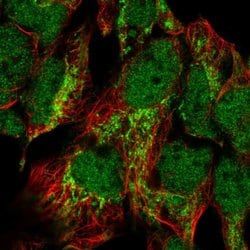
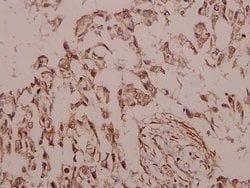
Immunocytochemistry, Immunohistochemistry (Paraffin)
Concentration
1 mg/mL
Formulation
PBS with 50% glycerol and 0.02% sodium azide; pH 7.2
Gene Accession No.
P43351, P43352
Gene Symbols
RAD52
Immunogen
Synthetic peptide corresponding to amino acids 80-120 of Human Rad52.
Quantity
100 μL
Primary or Secondary
Primary
Target Species
Human, Mouse, Rat
Product Type
Antibody
Isotype
IgG
Related Products

Description
- The antibody was affinity-purified from rabbit antiserum by affinity-chromatography using epitope-specific immunogen and the purity is > 95% (by SDS-PAGE)
- DNA double-strand breaks can be generated by exposure to ionizing radiation or through endogenous cellular reactions
- Double-strand breaks are generally thought to be repaired via one of two distinct mechanisms: homologous recombination (HR) or non-homologous end joining (NHEJ)
- Homologous recombination requires the activity of the members of the RAD52 epistasis group, which includeRAD50, RAD51, RAD52, RAD54, RDH54/TID1, RAD55, RAD57, RAD59, MRE11, and XRS2
- RAD52 can catalyze strand annealing reactions, and can form oligomers that attach to ends of single-stranded DNA.