SLC19A2 Polyclonal Antibody, Invitrogen™
Manufacturer: Thermo Scientific
Select a Size
| Pack Size | SKU | Availability | Price |
|---|---|---|---|
| Each of 1 | PIPA578332-Each-of-1 | In Stock | ₹ 48,905.50 |
PIPA578332 - Each of 1
In Stock
Quantity
1
Base Price: ₹ 48,905.50
GST (18%): ₹ 8,802.99
Total Price: ₹ 57,708.49
Antigen
SLC19A2
Classification
Polyclonal
Conjugate
Unconjugated
Gene
SLC19A2
Gene Alias
AV276020; AW322295; DDA1; high affinity thiamine transporter; reduced folate carrier protein (RFC) like; Slc19a2; solute carrier family 19 (thiamine transporter), member 2; solute carrier family 19 member 2; TC1; Thiamine carrier 1; Thiamine transporter 1; THMD1; THT1; THTR1; ThTr-1; TRMA
Host Species
Rabbit
Purification Method
Antigen affinity chromatography
Regulatory Status
RUO
Gene ID (Entrez)
10560, 116914
Content And Storage
Store at 4°C short term. For long term storage, store at -20°C, avoiding freeze/thaw cycles.
Form
Liquid
Applications
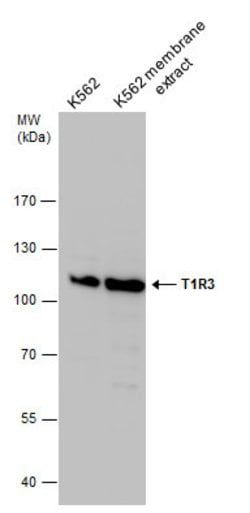
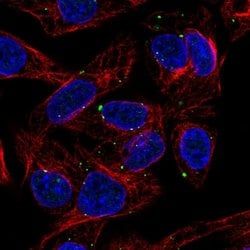
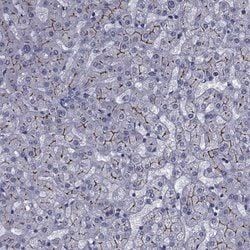
Immunocytochemistry, Western Blot
Concentration
1.25 mg/mL
Formulation
PBS with 20% glycerol and 0.025% ProClin 300; pH 7
Gene Accession No.
O60779, Q9EQN9
Gene Symbols
SLC19A2
Immunogen
Recombinant protein encompassing a sequence within the center region of human SLC19A2. The exact sequence is proprietary.
Quantity
100 μL
Primary or Secondary
Primary
Target Species
Human, Mouse
Product Type
Antibody
Isotype
IgG
Related Products




Description
- Positive Control: 293T, A431, HeLa, HepG2, mouse liver Predicted Reactivity: Rat (82%), Rhesus Monkey (98%) Store product as a concentrated solution
- Centrifuge briefly prior to opening the vial
- SLC19A2 encodes a thiamin transporter protein
- Mutations in this gene cause thiamin-responsive megaloblastic anemia syndrome (TRMA), which is an autosomal recessive disorder characterized by diabetes mellitus, megaloblastic anemia and sensorineural deafness.