EGR1 Polyclonal Antibody, Invitrogen™
Manufacturer: Thermo Scientific
Select a Size
| Pack Size | SKU | Availability | Price |
|---|---|---|---|
| Each of 1 | PIPA583116-Each-of-1 | In Stock | ₹ 48,905.50 |
PIPA583116 - Each of 1
In Stock
Quantity
1
Base Price: ₹ 48,905.50
GST (18%): ₹ 8,802.99
Total Price: ₹ 57,708.49
Antigen
EGR1
Classification
Polyclonal
Conjugate
Unconjugated
Gene
EGR1
Gene Alias
A530045N19Rik; AT225; early growth response 1; early growth response protein 1; egr; EGR1; EGR-1; ETR103; G0S30; Krox-1; Krox24; Krox-24; Krox-24 nuclear protein; Nerve growth factor-induced protein A; Ngf1; NGF1-A; Ngfi; NGFIA; NGFI-A; TIS8; transcription factor ETR103; Transcription factor Zif268; Zenk; Zfp-6; Zif268; zif-268; Zinc finger protein 225; zinc finger protein Krox-24; ZNF225
Host Species
Rabbit
Purification Method
Anitgen affinity chromatography, Antigen affinity chromatography
Regulatory Status
RUO
Gene ID (Entrez)
1958
Content And Storage
Store at 4°C short term. For long term storage, store at -20°C, avoiding freeze/thaw cycles.
Form
Liquid
Applications
Immunocytochemistry
Concentration
0.4 mg/mL
Formulation
PBS with 40% glycerol and 0.02% sodium azide; pH 7.2
Gene Accession No.
P18146
Gene Symbols
EGR1
Immunogen
Recombinant protein corresponding to Human EGR1
Quantity
100 μL
Primary or Secondary
Primary
Target Species
Human
Product Type
Antibody
Isotype
IgG
Related Products
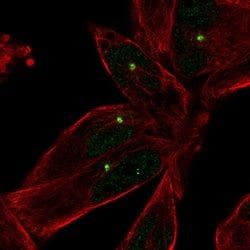
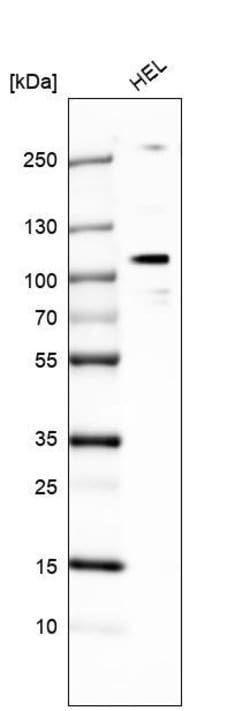
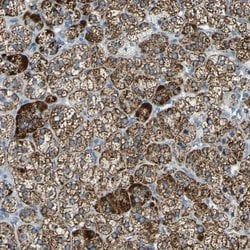
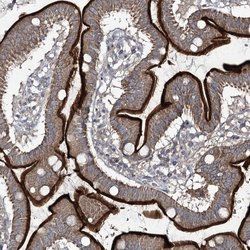

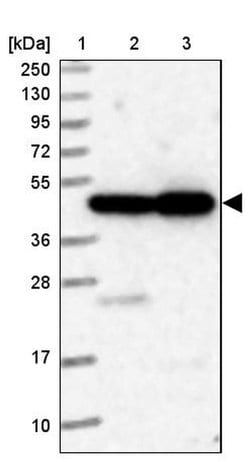
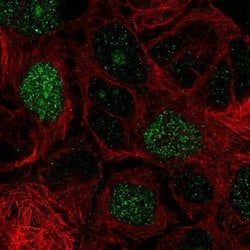
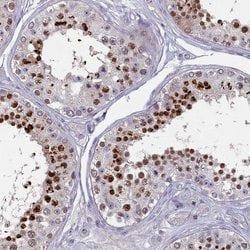
Description
- Immunogen sequence: IFPEPQSQAF PGSAGTALQY PPPAYPAAKG GFQVPMIPDY LFPQQQGDLG LGTPDQKPFQ GLESRTQQPS LTPLSTIKAF ATQSGSQDLK ALNTSYQSQL I The protein encoded by this gene belongs to the EGR family of C2H2-type zinc-finger proteins
- It is a nuclear protein and functions as a transcriptional regulator
- The products of target genes it activates are required for differentitation and mitogenesis
- Studies suggest this is a cancer suppresor gene.