PIPA584677
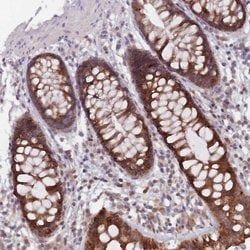
AEBP1 Polyclonal Antibody, Invitrogen™
Manufacturer: Thermo Scientific
Select a Size
| Pack Size | SKU | Availability | Price |
|---|---|---|---|
| Each of 1 | PIPA584677-Each-of-1 | In Stock | ₹ 52,332.00 |
PIPA584677 - Each of 1
In Stock
Quantity
1
Base Price: ₹ 52,332.00
GST (18%): ₹ 9,419.76
Total Price: ₹ 61,751.76
Antigen
AEBP1
Classification
Polyclonal
Conjugate
Unconjugated
Gene
AEBP1
Gene Alias
ACLP, adipocyte enhancer-binding protein 1, AE binding protein 1, AE-binding protein 1, AEBP1, Aortic carboxypeptidase-like protein, FLJ33612, transcription factor AEBP1
Host Species
Rabbit
Purification Method
Anitgen affinity chromatography, Antigen affinity chromatography
Regulatory Status
RUO
Gene ID (Entrez)
165
Content And Storage
Store at 4°C short term. For long term storage, store at -20°C, avoiding freeze/thaw cycles.
Form
Liquid
Applications
Immunohistochemistry
Concentration
0.05 mg/mL
Formulation
PBS with 40% glycerol and 0.02% sodium azide, pH 7.2
Gene Accession No.
Q8IUX7
Gene Symbols
AEBP1
Immunogen
Recombinant protein corresponding to Human AEBP1
Quantity
100 μL
Primary or Secondary
Primary
Target Species
Human
Product Type
Antibody
Isotype
IgG
Related Products



Description
- Immunogen sequence: PPVKPLLPPL PPDYGDGYVI PNYDDMDYYF GPPPPQKPDA ERQTDEEKEE LKKPKKEDSS PKEETDKWAV EKGKDH The adipocyte enhancer binding protein 1 (AEBP1) is a transcriptional repressor with carboxypeptidase (CP) activity
- This protein binds to a regulatory sequence, adipocyte enhancer 1 (AE-1), located in the proximal promoter region of the adipose P2 (aP2) gene, which encodes the adipocyte fatty-acid binding protein
- It is characterized as a member of the regulatory B-like CP family
- This protein seems to be activated by a novel mechanism, whereby the direct binding of DNA enhances its protease activity
- AEBP1 may play a role in differentiated vascular smooth muscle cells.