PIPA584749
TDRD3 Polyclonal Antibody, Invitrogen™
Manufacturer: Thermo Scientific
Select a Size
| Pack Size | SKU | Availability | Price |
|---|---|---|---|
| Each of 1 | PIPA584749-Each-of-1 | In Stock | ₹ 49,706.50 |
PIPA584749 - Each of 1
In Stock
Quantity
1
Base Price: ₹ 49,706.50
GST (18%): ₹ 8,947.17
Total Price: ₹ 58,653.67
Antigen
TDRD3
Classification
Polyclonal
Conjugate
Unconjugated
Gene
TDRD3
Gene Alias
4732418C03Rik, 6720468N18, Tdrd3, tudor domain containing 3, tudor domain-containing protein 3
Host Species
Rabbit
Purification Method
Anitgen affinity chromatography, Antigen affinity chromatography
Regulatory Status
RUO
Gene ID (Entrez)
81550
Content And Storage
Store at 4°C short term. For long term storage, store at -20°C, avoiding freeze/thaw cycles.
Form
Liquid
Applications
Immunocytochemistry, Immunofluorescence
Concentration
0.1 mg/mL
Formulation
PBS with 40% glycerol and 0.02% sodium azide, pH 7.2
Gene Accession No.
Q9H7E2
Gene Symbols
TDRD3
Immunogen
Recombinant protein corresponding to Human TDRD3
Quantity
100 μL
Primary or Secondary
Primary
Target Species
Human
Product Type
Antibody
Isotype
IgG
Related Products


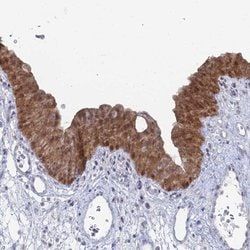

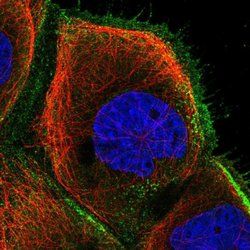
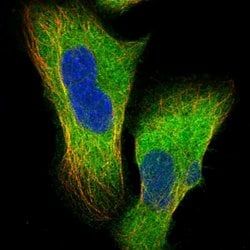

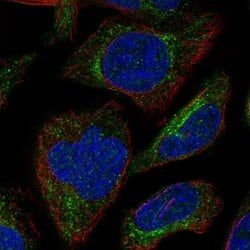
Description
- Immunogen sequence: PRFQRDSQNS KSVLEGSGLP RNRGSERPST SSVSEVWAED RIKCDRPYSR YDRTKDTSYP LGSQHSDGAF KKRDNSMQSR SGKGP TDRD3 belongs to the tudor domain group of proteins, which are prevalent among proteins involved in RNA metabolism
- TDRD3 is widely expressed and localizes predominantly in the cytoplasm
- It is detected in heart, brain, placenta, lung, liver, skeletal muscle, kidney, and pancreas
- Overexpression of TDRD3 in cells induces the formation of stress granules
- Multiple isoforms of TDRD3 exist due to alternative splicing variants
- In humans, the gene is located on chromosome 13.