Chromogranin C Polyclonal Antibody, Invitrogen™
Manufacturer: Thermo Scientific
Select a Size
| Pack Size | SKU | Availability | Price |
|---|---|---|---|
| Each of 1 | PIPA584972-Each-of-1 | In Stock | ₹ 53,400.00 |
PIPA584972 - Each of 1
In Stock
Quantity
1
Base Price: ₹ 53,400.00
GST (18%): ₹ 9,612.00
Total Price: ₹ 63,012.00
Antigen
Chromogranin C
Classification
Polyclonal
Conjugate
Unconjugated
Gene
SCG2
Gene Alias
Chcg, Chgc, Chromogranin C (Secretogranin II), chromogranin-C, EM66, Manserin, SCG2, Scg-2, secretogranin 2, secretogranin II, secretogranin II (chromogranin C), secretogranin-2, Secretoneurin, SgII, SN
Host Species
Rabbit
Purification Method
Anitgen affinity chromatography, Antigen affinity chromatography
Regulatory Status
RUO
Gene ID (Entrez)
7857
Content And Storage
Store at 4°C short term. For long term storage, store at -20°C, avoiding freeze/thaw cycles.
Form
Liquid
Applications
Immunohistochemistry
Concentration
0.48 mg/mL
Formulation
PBS with 40% glycerol and 0.02% sodium azide, pH 7.2
Gene Accession No.
P13521
Gene Symbols
SCG2
Immunogen
Recombinant protein corresponding to Human SCG2
Quantity
100 μL
Primary or Secondary
Primary
Target Species
Human
Product Type
Antibody
Isotype
IgG
Related Products
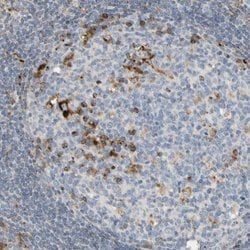

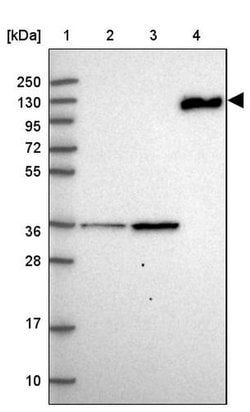
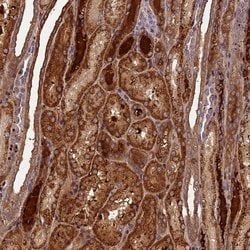
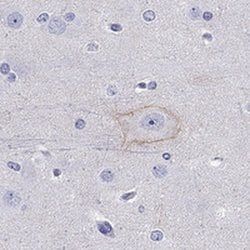
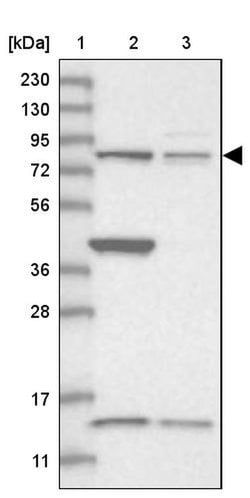

Description
- Immunogen sequence: NPVEEKIESQ TQEEVRDSKE NIEKNEQIND EMKRSGQLGI QEEDLRKESK DQLSDDVSKV IAYLKRLVNA AGSGRLQNGQ NGERA The protein encoded by this gene is a member of the chromogranin/secretogranin family of neuroendocrine secretory proteins
- Studies in rodents suggest that the full-length protein, secretogranin II, is involved in the packaging or sorting of peptide hormones and neuropeptides into secretory vesicles
- The full-length protein is cleaved to produce the active peptide secretoneurin, which exerts chemotaxic effects on specific cell types, and EM66, whose function is unknown.