ZNRD1 Polyclonal Antibody, Invitrogen™
Manufacturer: Thermo Scientific
Select a Size
| Pack Size | SKU | Availability | Price |
|---|---|---|---|
| Each of 1 | PIPA585046-Each-of-1 | In Stock | ₹ 48,905.50 |
PIPA585046 - Each of 1
In Stock
Quantity
1
Base Price: ₹ 48,905.50
GST (18%): ₹ 8,802.99
Total Price: ₹ 57,708.49
Antigen
ZNRD1
Classification
Polyclonal
Conjugate
Unconjugated
Gene
ZNRD1
Gene Alias
1110014N07Rik; DNA-directed RNA polymerase I subunit RPA12; HTEX6; HTEX-6; hZR14; nuclear RNA polymerase I small specific subunit; nuclear RNA polymerase I small specific subunit Rpa12 like; RNA polymerase I small specific subunit Rpa12; Rpa12; Tctex6; tctex-6; TEX6; transcription-associated zinc ribbon protein; zinc ribbon domain containing 1; zinc ribbon domain containing, 1; zinc ribbon domain-containing protein 1; ZNRD1; ZR14
Host Species
Rabbit
Purification Method
Anitgen affinity chromatography, Antigen affinity chromatography
Regulatory Status
RUO
Gene ID (Entrez)
30834
Content And Storage
Store at 4°C short term. For long term storage, store at -20°C, avoiding freeze/thaw cycles.
Form
Liquid
Applications
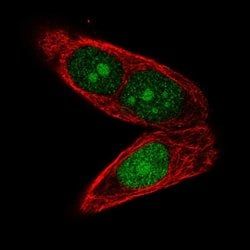
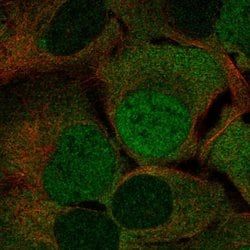
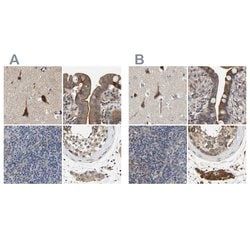
Immunocytochemistry, Immunohistochemistry
Concentration
0.2 mg/mL
Formulation
PBS with 40% glycerol and 0.02% sodium azide; pH 7.2
Gene Accession No.
Q9P1U0
Gene Symbols
ZNRD1
Immunogen
Recombinant protein corresponding to Human ZNRD1
Quantity
100 μL
Primary or Secondary
Primary
Target Species
Human
Product Type
Antibody
Isotype
IgG
Related Products



Description
- Immunogen sequence: GTAMPMSVEE GPECQGPVVD RRCPRCGHEG MAYHTRQMRS ADEGQTVFYT CTNCKFQEKE DS This gene encodes a DNA-directed RNA polymerase I subunit
- The encoded protein contains two potential zinc-binding motifs and may play a role in regulation of cell proliferation
- The encoded protein may be involved in cancer and human immunodeficiency virus progression
- Alternative splicing results in multiple transcript variants.