RARB Polyclonal Antibody, Invitrogen™
Manufacturer: Thermo Scientific
Select a Size
| Pack Size | SKU | Availability | Price |
|---|---|---|---|
| Each of 1 | PIPA585104-Each-of-1 | In Stock | ₹ 46,502.50 |
PIPA585104 - Each of 1
In Stock
Quantity
1
Base Price: ₹ 46,502.50
GST (18%): ₹ 8,370.45
Total Price: ₹ 54,872.95
Antigen
RARB
Classification
Polyclonal
Conjugate
Unconjugated
Gene
RARB
Gene Alias
A830025K23, HAP, HBV-activated protein, hepatitis B virus activated protein, MCOPS12, NR1B2, nuclear receptor subfamily 1 group B member 2, RAR beta, Rarb, RAR-b, RAR-beta, RARbeta1, RAR-Beta2, RAR-Beta4, RAR-epsilon, retinoic acid, retinoic acid receptor, retinoic acid receptor beta, retinoic acid receptor, beta, retinoic acid receptor, beta polypeptide, RRB2
Host Species
Rabbit
Purification Method
Antigen affinity chromatography
Regulatory Status
RUO
Gene ID (Entrez)
5915
Content And Storage
Store at 4°C short term. For long term storage, store at -20°C, avoiding freeze/thaw cycles.
Form
Liquid
Applications
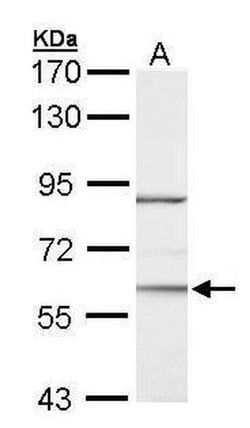
Western Blot
Concentration
0.97 mg/mL
Formulation
PBS with 1% BSA, 20% glycerol and 0.01% thimerosal, pH 7
Gene Accession No.
P10826
Gene Symbols
RARB
Immunogen
Recombinant protein encompassing a sequence within the center region of human Retinoic Acid Receptor beta.
Quantity
100 μL
Primary or Secondary
Primary
Target Species
Human
Product Type
Antibody
Isotype
IgG
Related Products


Description
- Keep as concentrated solution
- Predicted reactivity: Mouse (98%), Rat (98%), Chicken (96%)
- Positive Control: HepG2
- Store product as a concentrated solution
- Centrifuge briefly prior to opening the vial
- Retinoic Acid (RA; active metabolite of vitamin A) plays a prominent role in regulating the transition of proliferating precursor cells (such as carcinoma cells and neuronal precursors) to postmitotic differentiated cells
- The Retinoid X Receptors (RXRs) family (RXR alpha, beta, and gamma), preferentially bind 9-cis -RA and regulate gene transcription by forming heterodimers with a second family of RA receptors
- RAs have been suggested to potentially play a therapeutic role in cervical cancer
- RAs are known to play key roles in neuronal development and an increasing body of evidence indicates that retinoid signaling may regulate synaptic plasticity and associated learning and memory behaviors.