ST1529100UG
MilliporeSigma™ anti-HTT Clone: 3F1,
Manufacturer: MilliporeSigma™
Select a Size
| Pack Size | SKU | Availability | Price |
|---|---|---|---|
| Each of 1 | ST1529100UG-Each-of-1 | In Stock | ₹ 44,393.20 |
ST1529100UG - Each of 1
In Stock
Quantity
1
Base Price: ₹ 44,393.20
GST (18%): ₹ 7,990.776
Total Price: ₹ 52,383.976
Antigen
HTT
Classification
Monoclonal
Conjugate
Unconjugated
Host Species
Mouse
Quantity
100 μg
Primary or Secondary
Primary
Target Species
Human
Form
Purified
Applications
ELISA, Immunoblot, Immunoblot, Immunohistochemistry (Paraffin)
Clone
3F1
Formulation
In PBS, pH 7.2.
Immunogen
A recombinant polypeptide corresponding to amino acids 81-191 of human HTT, expressed as a GST fusion protein
Regulatory Status
RUO
Test Specificity
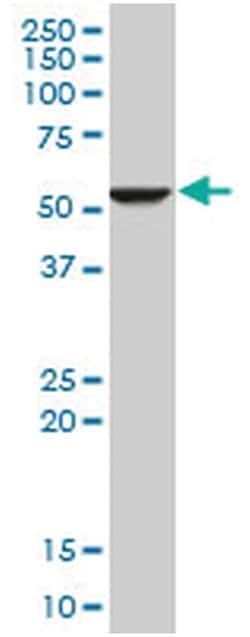
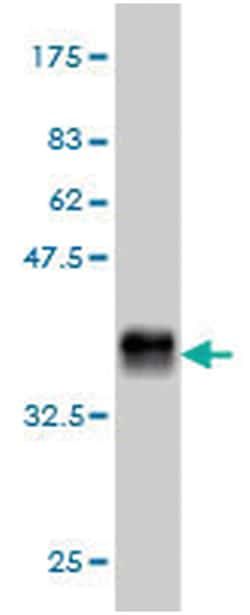
Recognizes the ∽50kDa HTT protein in U-2 OS and HeLa cells and human salivary gland tissue.
Content And Storage
−20°C
Isotype
IgG2a
Related Products



Description
- Specifically detects HTT Clone: 3F1 in Human samples, and it is validated for ELISA, Immunohistochemistry (Paraffin), Immuno Blotting Huntington's disease is a gene-linked neurodegenerative disorder characterized by loss of striatal neurons
- This disorder is thought to be caused by an expanded, unstable trinucleotide repeat in the huntingtin gene, which translates as a polyglutamine repeat in the protein product
- A fairly broad range in the number of trinucleotide repeats has been identified in normal controls, and repeat numbers in excess of 40 have been described as pathological
- The huntingtin locus is large, spanning 180 kb and consisting of 67 exons
- The huntingtin gene is widely expressed and is required for normal development
- It is expressed as 2 alternatively polyadenylated forms displaying different relative abundance in various fetal and adult tissues
- The larger transcript is ∽13.7 kb and is expressed predominantly in adult and fetal brain, whereas the smaller transcript is ∽10.3 kb and is more widely expressed
- The genetic defect leading to Huntington's disease may not necessarily eliminate transcription, but may confer a new property on the mRNA or alter the function of the protein
- One candidate is the huntingtin-associated protein-1, highly expressed in brain, which has increased affinity for huntingtin protein with expanded polyglutamine repeats.