ST1630100UG
MilliporeSigma™ anti-FGF8 Clone: 2A10,
Manufacturer: MilliporeSigma™
Select a Size
| Pack Size | SKU | Availability | Price |
|---|---|---|---|
| Each of 1 | ST1630100UG-Each-of-1 | In Stock | ₹ 49,840.00 |
ST1630100UG - Each of 1
In Stock
Quantity
1
Base Price: ₹ 49,840.00
GST (18%): ₹ 8,971.20
Total Price: ₹ 58,811.20
Antigen
FGF8
Classification
Monoclonal
Conjugate
Unconjugated
Host Species
Mouse
Quantity
100 μg
Primary or Secondary
Primary
Target Species
Human, Mouse, Rat
Form
Purified
Applications
ELISA, Immunoblot, Immunoblot
Clone
2A10
Formulation
In PBS, pH 7.2.
Immunogen
Full-length, recombinant, human FGF8 (aa 65-133), expressed as a GST fusion protein
Regulatory Status
RUO
Test Specificity
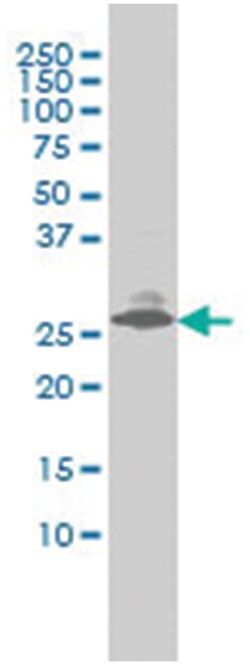
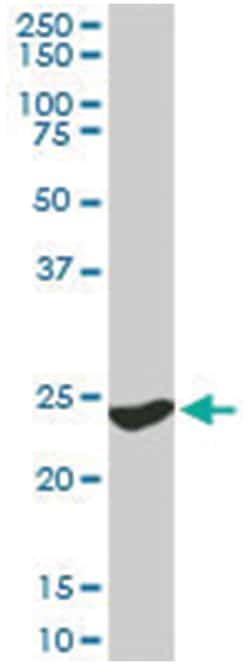
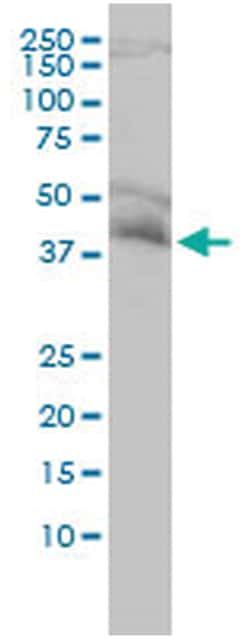
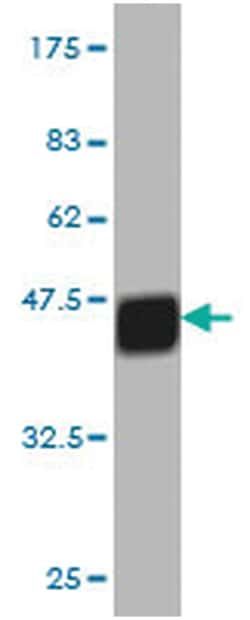
Recognizes the ∽30-35kDa FGF8 protein in PC-12, Jurkat, HepG2, NIH3T3, and Raw 264.7 cells.
Content And Storage
−20°C
Isotype
IgG2a
Related Products




Description
- Specifically detects FGF8 Clone: 2A10 in Human, Mouse, Rat samples, and it is validated for ELISA, Immuno Blotting The protein encoded by this gene is a member of the fibroblast growth factor (FGF) family
- FGF family members possess broad mitogenic and cell survival activities, and are involved in a variety of biological processes, including embryonic development, cell growth, morphogenesis, tissue repair, tumor growth and invasion
- This protein is known to be a factor that supports androgen and anchorage independent growth of mammary tumor cells
- Overexpression of this gene has been shown to increase tumor growth and angiogensis
- The adult expression of this gene is restricted to testes and ovaries
- Temporal and spatial pattern of this gene expression suggests its function as an embryonic epithelial factor
- Studies of the mouse and chick homologs revealed roles in midbrain and limb development, organogenesis, embryo gastrulation and left-right axis determination
- The alternative splicing of this gene results in four transcript variants.