p-Phenylenediamine
98% (GC)
Manufacturer: Sigma Aldrich
CAS Number: 106-50-3
Synonym(S): 1,4-Benzenediamine, 1,4-Diaminobenzene, 1,4-Phenylenediamine
Select a Size
| Pack Size | SKU | Availability | Price |
|---|---|---|---|
| 50 G | P6001-50-G | In Stock | ₹ 3,875.35 |
| 100 G | P6001-100-G | In Stock | ₹ 6,668.20 |
| 250 G | P6001-250-G | In Stock | ₹ 9,038.88 |
| 1 KG | P6001-1-KG | In Stock | ₹ 23,890.78 |
P6001 - 50 G
In Stock
Quantity
1
Base Price: ₹ 3,875.35
GST (18%): ₹ 697.563
Total Price: ₹ 4,572.913
vapor density
3.7 (vs air)
Quality Level
200
vapor pressure
1.08 mmHg ( 100 °C)
description
anti-fade reagent
Assay
98% (GC)
bp
267 °C (lit.)
mp
138-143 °C (lit.)
SMILES string
Nc1ccc(N)cc1
InChI
1S/C6H8N2/c7-5-1-2-6(8)4-3-5/h1-4H,7-8H2
InChI key
CBCKQZAAMUWICA-UHFFFAOYSA-N
Other Options
| Image | Product Name | Manufacturer | Price Range | |
|---|---|---|---|---|
Sigma Aldrich Fine Chemicals Biosciences p-Phenylenediamine sublimed, >=99% | 106-50-3 | MFCD00007901 | 1G | -- | ₹ 6,372.40 | ||
p-Phenylenediamine | -- | ₹ 6,246.03 | ||
p-Phenylenediamine | -- | ₹ 10,965.73 - ₹ 25,795.98 | ||
p-Phenylenediamine | -- | ₹ 12,156.48 - ₹ 21,617.53 | ||
106-50-3 | P-Phenylenediamine | -- | ₹ 623.00 - ₹ 17,800.00 |
Related Products
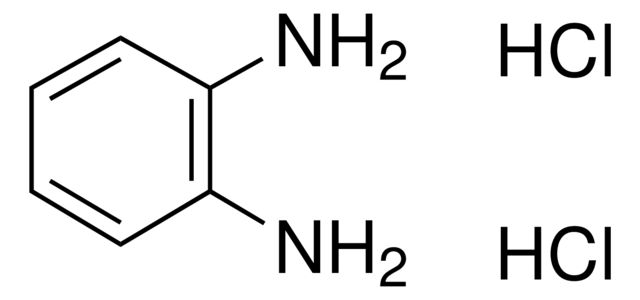
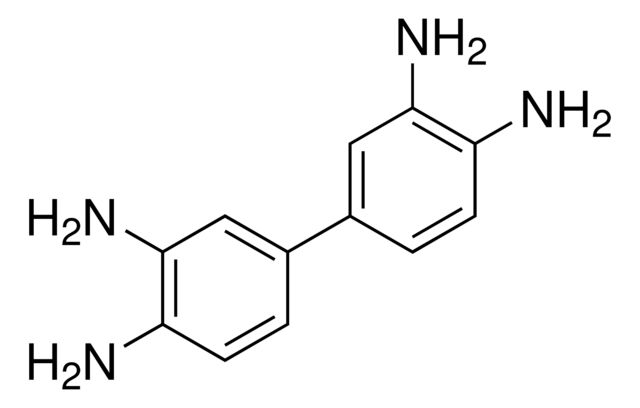
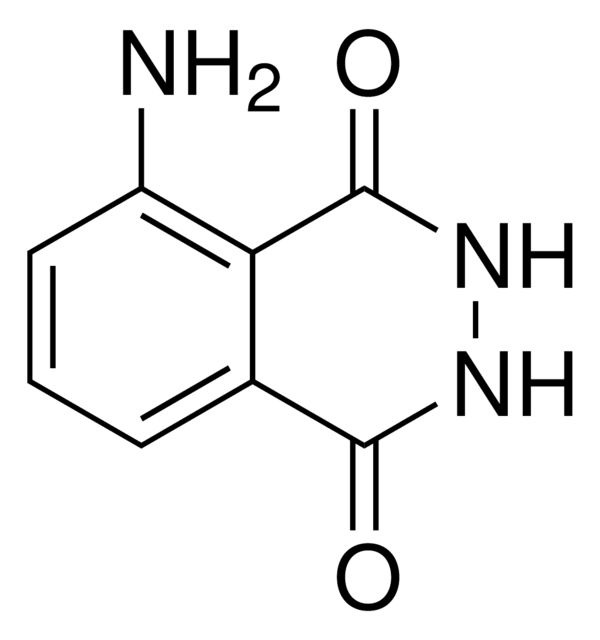
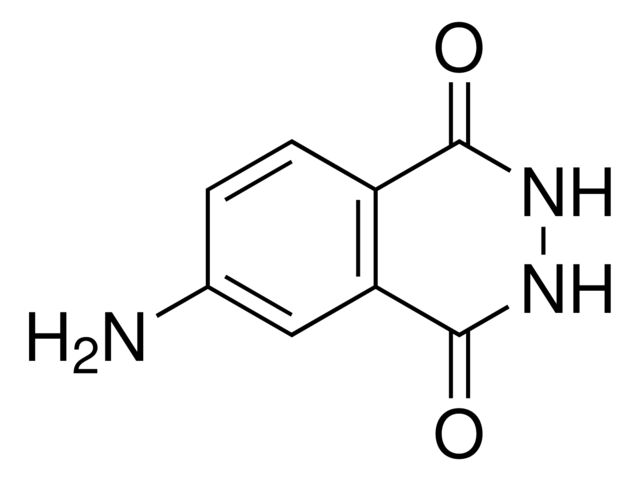
Description
- Application: p-Phenylenediamine has been used:to evaluate its sensitization potential in vitro in langerhans-like dendritic cells and autologous T cells[1]to treat the dorsal sides of the ears of mice, to study its systemic immunological effects[2]in glycerol to coverslip coronal sections in the attempt to count Aβ plaques[3]Anti-fade reagent is added to the mounting medium in fluorescence microscopy to retard photobleaching of fluorescein and other fluorescent dyes.
- Biochem/physiol Actions: p-Phenylenediamine causes allergic reactions with skin.[4] It is widely used in hair dyes. It eventually forms Bandrowski′s base, which is found to be the primary cause for allergy.[5] p-Phenylenediamine exposure results in dermatitis, urticaria and anaphylaxis.[6] It acts as an electron donor and is known to reduce cytochrome c.
- Caution: Darkens in storage.
SAFETY INFORMATION
Pictograms
Signal Word
Danger
Hazard Statements
Precautionary Statements
P273 - P280 - P301 + P310 - P302 + P352 + P312 - P304 + P340 + P311 - P305 + P351 + P338
Hazard Classifications
Acute Tox. 3 Dermal - Acute Tox. 3 Inhalation - Acute Tox. 3 Oral - Aquatic Acute 1 - Aquatic Chronic 1 - Eye Irrit. 2 - Skin Sens. 1 - STOT SE 1 Oral
Target Organs
Kidney,Heart,Musculo-skeletal system
WGK
WGK 3
Flash Point(F)
closed cup
Flash Point(C)
closed cup
Personal Protective Equipment
dust mask type N95 (US), Eyeshields, Gloves