4521809
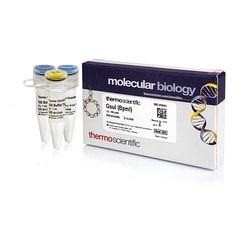
Thermo Scientific™ GsuI (BpmI) (5 U/μL)
The GsuI (BpmI) restriction enzyme recognizes CTGGAG(16/14)^ sites and cuts best at 30°C in B buffer (Isoschizomers: BpmI).
Manufacturer: Fischer Scientific
The price for this product is unavailable. Please request a quote
Concentration
5 U/μL
Enzyme
GsuI (BpmI)
Sensitive to Heat Inactivation
Yes
Type IIS RE
Yes
Research Category
Scarless Cloning
Methylation Sensitivity
Dcm Methylation-Sensitive, Not Dam Methylation-Sensitive, Not CpG Methylation-Sensitive
Compatible Buffer
10X Buffer B
Optimal Reaction Temperature
30°C
Product Type
Restriction Enzyme
Related Products





Description
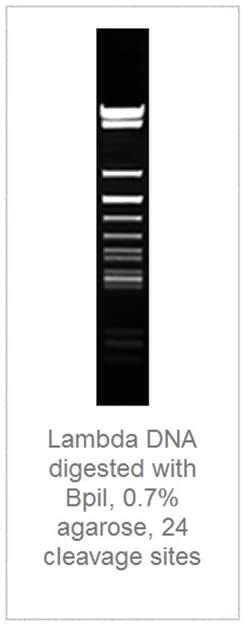
- Lambda DNA digested with GsuI (BpmI), 1% agarose, 25 cleavage sites conventional restriction endonucleases are a large collection of high quality restriction enzymes, optimized to work in one of the buffers of the Five Buffer System
- In addition, the universal Tango buffer is provided for convenience in double digestions
- All of the enzymes exhibit 100% activity in the recommended buffer and reaction conditions
- To ensure consistent performance, Thermo Scientific restriction enzyme reaction buffers contain premixed BSA, which enhances the stability of many enzymes and binds contaminants that may be present in DNA preparations
- Highlights Superior quality -stringent quality control and industry leading manufacturing process Convenient color-coded Five Buffer System Includes universal Tango buffer for double-digestions BSA premixed in reaction buffers Wide selection of restriction endonuclease specificities