MABF2031M
Anti-CD1b Antibody, clone BCD1b3.1
clone BCD1b3.1, from mouse
Manufacturer: Sigma Aldrich
Synonym(S): T-cell surface glycoprotein CD1b
Select a Size
| Pack Size | SKU | Availability | Price |
|---|---|---|---|
| 25 μG | MABF2031M-25-μG | In Stock | ₹ 13,730.00 |
| 100 μG | MABF2031M-100-μG | In Stock | ₹ 41,010.01 |
MABF2031M - 25 μG
In Stock
Quantity
1
Base Price: ₹ 13,730.00
GST (18%): ₹ 2,471.40
Total Price: ₹ 16,201.40
biological source
mouse
Quality Level
100
antibody form
purified immunoglobulin
antibody product type
primary antibodies
clone
BCD1b3.1, monoclonal
species reactivity
guinea pig, human
packaging
antibody small pack of 25 μg
technique(s)
flow cytometry: suitableimmunohistochemistry: suitableinhibition assay: suitableneutralization: suitable
isotype
IgG1κ
NCBI accession no.
NP_001755
Related Products
Description
- General description: T-cell surface glycoprotein CD1b (UniProt: P29016; also known as CD1b) is encoded by the CD1B gene (Gene ID: 910) in human. CD1b is an antigen-presenting protein that binds self and non-self lipid and glycolipid antigens and presents them to T-cell receptors on natural killer T-cells. The most prominent known function of CD1b molecules is to associate with lipids from pathogens in order to stimulate T cells and induce host defense mechanisms. CD1b is expressed on cortical thymocytes, certain T-cell leukemia, and other tissues. Two isoforms of CD1b are reported that are produced by alternative splicing. CD1b has an extracellular domain (aa 18-3-3), a helical domain (aa 304-324), and a cytoplasmic tail (aa 329-332). The newly synthesized CD1b molecules follow an intracellular transport pathway that leads it to the cell surface from endoplasmic reticulum and subsequently to internalization from the plasma membrane into the endocytic pathway. After internalization, CD1b molecules are sorted for transport to lysosomes in the sorting endosome. (Ref.: Briken, V., et al. (2002). EMBO J. 21(4); 825-834).
- Specificity: Clone BCD1b3.1 detects T-cell surface glycoprotein CD1b in human and guinea pig.
- Immunogen: Isolated human CD1+ monocytes.
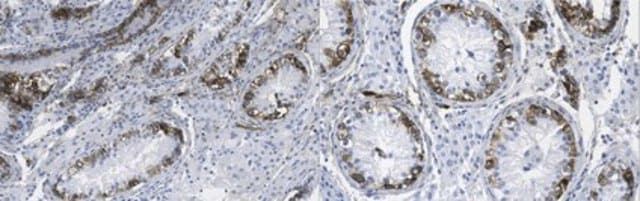
- Application: Anti-CD1b, clone BCD1b3.1, Cat. No. MABF2031, is a mouse monoclonal antibody that detects T-cell surface glycoprotein CD1b and it has been tested for use in Flow Cytometry, Immunohistochemistry, Immunoprecipitation, Inhibition assays, and Neutralizing function.
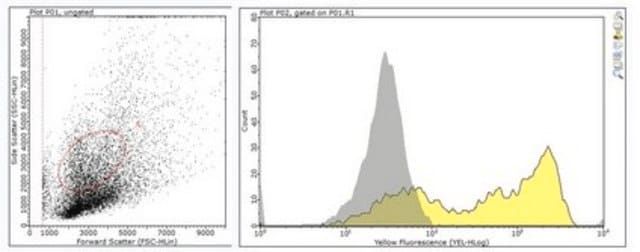
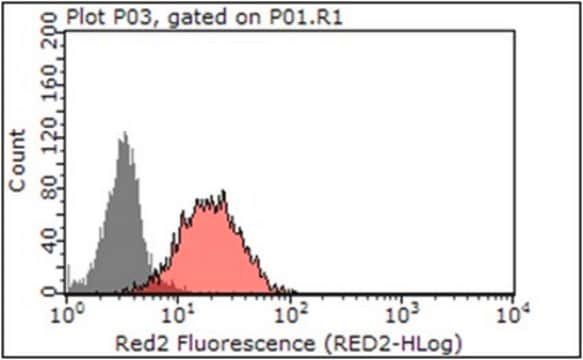
- Quality: Evaluated by Flow Cytometry in MOLT4 cells.Flow Cytometry Analysis: 1 µg of this antibody detected CD1b in one million MOLT4 cells.
- Target description: 36.94 kda calculated.
- Physical form: Format: Purified
- Storage and Stability: Stable for 1 year at -20°C from date of receipt. Handling Recommendations: Upon receipt and prior to removing the cap, centrifuge the vial and gently mix the solution. Aliquot into microcentrifuge tubes and store at -20°C. Avoid repeated freeze/thaw cycles, which may damage IgG and affect product performance.
- Other Notes: Concentration: Please refer to lot specific datasheet.
- Disclaimer: Unless otherwise stated in our catalog or other company documentation accompanying the product(s), our products are intended for research use only and are not to be used for any other purpose, which includes but is not limited to, unauthorized commercial uses, in vitro diagnostic uses, ex vivo or in vivo therapeutic uses or any type of consumption or application to humans or animals.
SAFETY INFORMATION
WGK
WGK 2
Flash Point(F)
Not applicable
Flash Point(C)
Not applicable