01-674-881
Adiponectin Receptor 2 Polyclonal Antibody, Invitrogen™
Manufacturer: Thermo Scientific
Select a Size
| Pack Size | SKU | Availability | Price |
|---|---|---|---|
| Each of 1 | 01-674-881-Each-of-1 | In Stock | ₹ 52,777.00 |
01-674-881 - Each of 1
In Stock
Quantity
1
Base Price: ₹ 52,777.00
GST (18%): ₹ 9,499.86
Total Price: ₹ 62,276.86
Antigen
Adiponectin Receptor 2
Classification
Polyclonal
Conjugate
Unconjugated
Gene
ADIPOR2
Gene Alias
1110001I14Rik; ACDCR2; ADCR2; adiponectin receptor 2; adiponectin receptor protein 2; Adipor2; AI115388; AW554121; D6Ucla1e; FLJ21432; MGC4640; Paqr2; Parq2; Progestin and adipoQ receptor family member 2; Progestin and adipoQ receptor family member II
Host Species
Rabbit
Purification Method
Ammonium sulfate precipitation
Regulatory Status
RUO
Gene ID (Entrez)
79602
Content And Storage
-20° C, Avoid Freeze/Thaw Cycles
Form
Liquid
Applications
ELISA, Western Blot
Concentration
1 mg/mL
Formulation
PBS with 0.08% sodium azide
Gene Accession No.
Q86V24
Gene Symbols
ADIPOR2
Immunogen
Synthetic peptide derived from human adiponectin receptor 2.
Quantity
100 μg
Primary or Secondary
Primary
Target Species
Human
Product Type
Antibody
Isotype
IgG
Related Products






Description
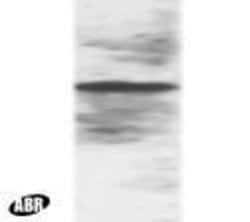
- A suggested positive control for this product is colon, hippocampus, or trachea lysate
- Adiponectin (also known as 30-kDa adipocyte complement-related protein; Acrp30) is a hormone secreted by adipocytes that acts as an antidiabetic and anti-atherogenic adipokine
- Levels of adiponectin in the blood are decreased under conditions of obesity, insulin resistance and type 2 diabetes
- Administration of adiponectin causes glucose-lowering effects and ameliorates insulin resistance in mice
- Conversely, adiponectin-deficient mice exhibit insulin resistance and diabetes
- This insulin-sensitizing effect of adiponectin seems to be mediated by an increase in fatty-acid oxidation through activation of AMP kinase and PPAR
- Here we report the cloning of complementary DNAs encoding adiponectin receptors 1 and 2 (AdipoR1 and AdipoR2) by expression cloning
- AdipoR1 is abundantly expressed in skeletal muscle, whereas AdipoR2 is predominantly expressed in the liver
- These two adiponectin receptors are predicted to contain seven transmembrane domains, but are structurally and functionally distinct from G-protein-coupled receptors
- Expression of AdipoR1/R2 or suppression of AdipoR1/R2 expression by small-interfering RNA supports our conclusion that they serve as receptors for globular and full-length adiponectin, and that they mediate increased AMP kinase and PPAR- ligand activities, as well as fatty-acid oxidation and glucose uptake by adiponectin.