DAXX Monoclonal Antibody (DAXX-01), Invitrogen™
Manufacturer: Thermo Scientific
Select a Size
| Pack Size | SKU | Availability | Price |
|---|---|---|---|
| Each of 1 | 01-676-052-Each-of-1 | In Stock | ₹ 41,385.00 |
01-676-052 - Each of 1
In Stock
Quantity
1
Base Price: ₹ 41,385.00
GST (18%): ₹ 7,449.30
Total Price: ₹ 48,834.30
Antigen
DAXX
Classification
Monoclonal
Concentration
1 mg/mL
Formulation
PBS with 15mM sodium azide; pH 7.4
Gene Accession No.
Q9UER7
Gene Symbols
DAXX
Immunogen
Recombinant C-terminal part (aa 558-740) of human Daxx.
Quantity
100 μg
Primary or Secondary
Primary
Target Species
Human
Product Type
Antibody
Isotype
IgG1
Applications
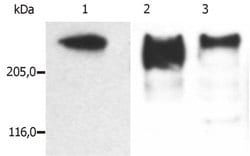
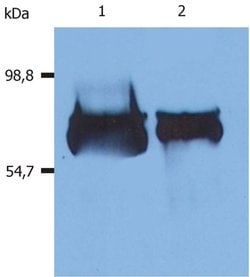
Immunocytochemistry, Western Blot
Clone
DAXX-01
Conjugate
Unconjugated
Gene
DAXX
Gene Alias
BING2; CENP-C binding protein; DADB-159G18.9; DAP6; Daxx; death domain associated protein; Death domain-associated protein 6; death-associated protein 6; death-domain associated protein; EAP1; ETS1-associated protein 1; Fas death domain-associated protein; Fas-binding protein; hDaxx; MGC126245; MGC126246; SMIM40; Unknown (protein for MGC:138055)
Host Species
Mouse
Purification Method
Protein A
Regulatory Status
RUO
Gene ID (Entrez)
1616
Content And Storage
4° C, do not freeze
Form
Liquid
Related Products


Description
- This gene encodes a multifunctional protein that resides in multiple locations in the nucleus and in the cytoplasm
- It interacts with a wide variety of proteins, such as apoptosis antigen Fas, centromere protein C, and transcription factor erythroblastosis virus E26 oncogene homolog 1
- In the nucleus, the encoded protein functions as a potent transcription repressor that binds to sumoylated transcription factors
- Its repression can be relieved by the sequestration of this protein into promyelocytic leukemia nuclear bodies or nucleoli
- This protein also associates with centromeres in G2 phase
- In the cytoplasm, the encoded protein may function to regulate apoptosis
- The subcellular localization and function of this protein are modulated by post-translational modifications, including sumoylation, phosphorylation and polyubiquitination
- Alternative splicing results in multiple transcript variants.